
After Buying Land in Texas: A Complete First-Year Checklist
Updated: Sep 15
Closing on rural acreage is an important milestone, but ownership becomes much easier when you turn the excitement into a practical first-year plan. The details you organize now can help you make informed decisions about boundaries, utilities, insurance, taxes, and future use.
After buying land in Texas, start by confirming your deed and title records, organizing every closing document. Verifying property-specific rules, and creating a timeline for surveys, utilities, insurance, taxes, and long-term stewardship.
Texas property rights are subject to a patchwork of land-use regulations, so assumptions about what you can build or do on a parcel can create avoidable surprises. Texas A&M AgriLife Extension also encourages new landowners to learn the legal issues that affect their property. Begin with a reliable ownership file and a clear record of what was transferred at closing before moving into the practical work of managing the land.
After Buying Land in Texas: Immediate Steps After Closing , Paperwork and Record-Keeping
After buying land in Texas, the first priorities after closing are administrative. A complete paper trail helps you confirm what you purchased, protect important records, and resolve questions before they become expensive or confusing. If your purchase used the owner financing process, keep the financing agreement with the rest of your property records.
Record the deed with the county clerk
Confirm that the signed deed has been submitted to and recorded by the county clerk or county recorder responsible for the property. Recording places the transfer in the county's public records, but the exact process, fees, and timing can vary. Ask for a recording receipt or an official copy once the filing is complete, and save it with your closing documents. If you are unsure which office handles the filing, check your closing instructions or contact the county directly.
Verify your title insurance documents
Review the final title policy, title commitment, and any listed exceptions. Make sure the named owner, legal description, and property address or identification details are accurate. Title insurance does not remove every exception or restriction, so read the policy and ask the title company about language you do not understand. Keep the title company's contact information in the same file for future reference. Read our guide to title insurance for land in Texas for a deeper look.
Create a permanent land ownership file
Use a physical binder, secure digital folder, or both. Include the recorded deed, title policy, settlement statement, financing agreement, receipts, survey, easement information, restrictions, tax notices, and correspondence with the county or title company. Name digital files clearly and back them up. This organization will make future tax, insurance, financing, or development conversations easier.
Compare the legal description with the survey
Check that the legal description in the deed and title documents matches the survey you received. Look for the same lot, block, acreage reference, and identifying calls. A street address alone is not enough to establish the property's legal boundaries. If anything appears inconsistent, pause before relying on the records and ask the title company or a qualified Texas professional to review the discrepancy.
For broader preparation, use this buying rural land in Texas guide, and consider Texas A&M AgriLife Extension's landowner education course for practical information about legal issues and land ownership. Requirements vary by county and property, so verify details rather than assuming one process applies everywhere.
Get a Survey and Mark Your Property Boundaries
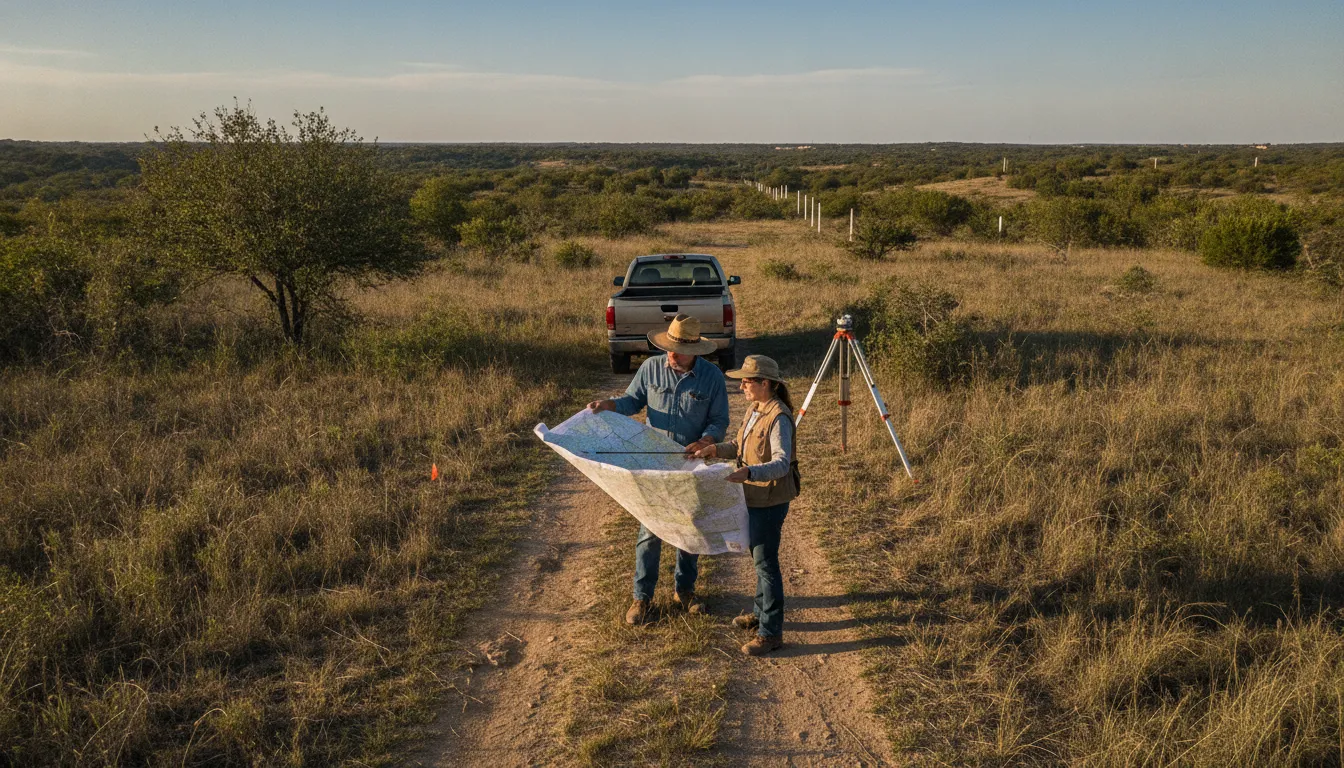
A current survey gives you a clearer understanding of where your land begins and ends, which features sit on the property, and where future improvements may fit. It can also help you spot boundary questions before they become an expensive dispute with a neighbor.
Order a current survey
Ask a licensed surveyor to review the legal description and locate the property corners and boundary lines. A survey is especially important if the property has changed hands several times. Older markers are missing, or nearby fences and roads do not appear to follow the legal description. As a general planning estimate, a one-acre survey may average about $500 to $1,000. But the actual price can change with acreage, terrain, access, records, and the surveyor's scope. Request a written quote before work begins. See our land survey cost guide for more detail.
Review the map before walking the land
Study the survey alongside a topographic map, deed, and any available easement information. Topography can reveal slopes, drainage paths, low areas, and access points that are easy to miss from a road. The REALTORS Land Institute includes studying a topographic map and establishing boundaries among its recommended steps after purchasing land. Read the RLI Land Institute's six-step guidance for additional context.
Walk the property with the survey
Use the survey in the field and compare its measurements with visible landmarks. Look for existing fences, gates, utility features, driveways, and other improvements. Take dated photos and note questions for the surveyor instead of assuming that a fence or cleared area marks the legal boundary.
Install visible boundary markers
After the corners and lines are confirmed, consider installing durable markers that are easy to find without creating a hazard. Keep a copy of the survey with your property records, and record marker locations with photos or coordinates. Ask the surveyor what marker type is appropriate for the land and local conditions.
Prevent accidental encroachment
Before building a fence, driveway, shed, home, or utility line, verify its location against the survey and any easements or restrictions. Do not move, remove, or rely on a marker you cannot identify. Confirming the line early helps reduce the risk of placing improvements across a boundary and gives you a practical reference as you begin using the property.
What Utilities Do You Need First on Raw Texas Land?
Utility planning is one of the most practical tasks after buying land in Texas. Before ordering equipment or scheduling construction, confirm which services reach the property, who provides them, what approvals are required, and how long each connection may take.
Start with the local electric provider
Identify the electric utility serving the parcel by checking with the county, neighboring landowners, or the property seller. In rural areas, service may come from an electric cooperative rather than a large investor-owned utility. Ask for a site evaluation and a written estimate of connection costs. The provider may need to extend a line, install a transformer, or set a new utility pole before power can reach a homesite.
Ask whether the planned building location changes the estimate. A home, manufactured home, workshop, or well pump may require different service equipment. Keep the utility's requirements with your closing documents, and do not assume that a nearby power line means an inexpensive connection. Pole installation and other site work can add time to the schedule. Read our guide to getting electricity to rural land for a deeper breakdown.
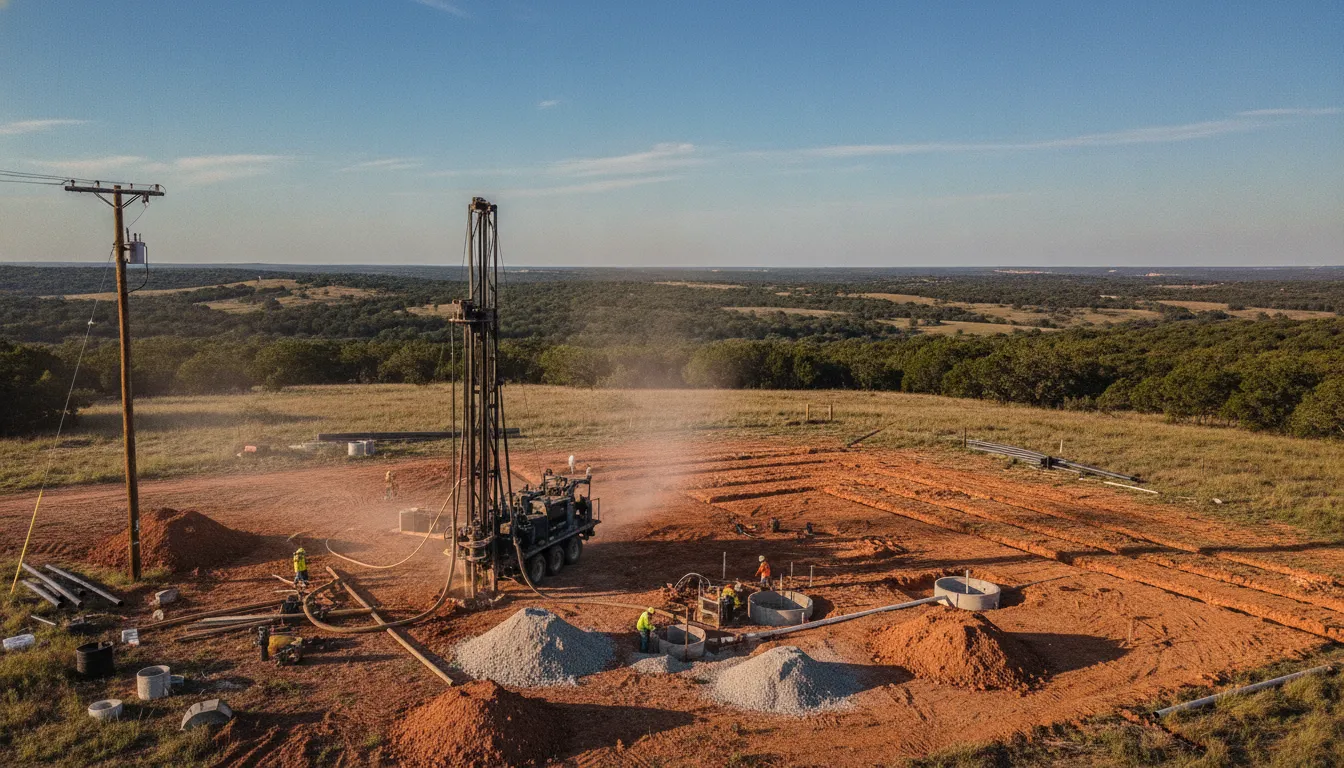
Compare a well with a rural water connection
For water, first determine whether a rural water corporation or other provider serves the property. A connection may require an application, a tap fee, a meter, and an approved location for the service line. Confirm the provider's service area and requirements before budgeting for a building project.
If no public or rural water connection is available, a private well may be the practical alternative. Well drilling requires site planning, contractor availability, and local research. The depth, yield, water quality, and total cost can vary by location, so obtain property-specific estimates rather than relying on a neighbor's experience. A well can take weeks to arrange and complete, especially when drilling schedules are busy. See our guide to checking utilities before buying land for more on the process.
Plan septic approval before installation
Raw land without access to a public sewer system generally requires an on-site wastewater system. Contact the county health department or other designated local authority to learn which permit, site evaluation, and soil information are required. The approved system depends on the parcel's conditions and the intended use. A licensed or authorized septic professional can help coordinate the design and installation process. Check our guide to septic system costs in Texas for helpful context.
Build a realistic sequence: confirm electric and water options, investigate septic requirements, and then finalize the homesite or other development area. Requirements vary by county and property, so verify each step with the appropriate provider before work begins. If you are still comparing parcels, ask the seller what utility information is available and explore available properties with the property team.
Do You Need Insurance on Raw Land?
Insurance is an important part of protecting your investment after buying land in Texas. A vacant parcel can still create liability concerns, even when no home or other structure has been built. The right policy can help address risks connected to people entering the property, accidents, and certain forms of property damage.
Vacant land insurance, sometimes called vacant lot or vacant acreage insurance, is designed for property that is not yet occupied by a residence. It may provide liability coverage if a trespasser or invited visitor is injured on the land, although coverage depends on the policy language and the insurer's exclusions. Depending on the policy, it may also address risks such as vandalism, fire, or damage from certain natural events. Ask an insurance professional what is covered in your county and whether fences, gates, access roads, wells, or other improvements change the policy.
How is vacant land insurance different from homeowners insurance?
Homeowners insurance generally combines liability protection with coverage for an occupied house and its contents. Raw land has no residence or personal property to insure, so a homeowners policy may not be appropriate before construction. Do not assume that your future home policy, a vehicle policy, or another existing policy automatically covers an undeveloped parcel. Confirm coverage with a licensed insurance professional and review how the policy treats unauthorized visitors, hunting, recreational use, livestock, and construction activity.
For a practical overview, read our guide to vacant land insurance in Texas. It can help you prepare questions before comparing quotes. Property-specific conditions still matter, including restrictions, access, improvements, and your intended use.
When should you switch to builder's risk insurance?
Once construction begins, your insurance needs change. A builder's risk policy is typically designed for a home or other structure while it is being built. It may cover the structure, materials, and equipment against specified losses during construction, subject to limits, exclusions, and the contractor's responsibilities. Ask when coverage should begin, who must be named on the policy, and whether theft, weather damage, temporary structures, or materials stored off-site are included. Coordinate the transition with your builder and insurer before work starts, then arrange an appropriate homeowners policy before the property is occupied.
Understanding Property Taxes and Ag-Exemptions in Texas
After buying land in Texas, make property taxes part of your first-year checklist. Your county appraisal district (CAD) determines the property's appraised value, while local taxing entities set the rates applied to that value. Rates and valuation practices vary by county, so review the appraisal record and confirm the current tax statement rather than relying on a general estimate.
Learn how the Texas ag-exemption works before assuming raw acreage will automatically receive a lower valuation. A homestead exemption is generally tied to a qualifying residence and does not automatically apply to undeveloped land simply because you own it. If the property has no qualifying home, ask the CAD which exemptions or special valuations may fit your situation. Check our detailed Texas ag-exemption requirements guide for more specifics.
How does an agricultural exemption work?
In everyday conversation, "ag-exemption" usually refers to an agricultural or open-space valuation. Instead of valuing land solely according to its potential market or development value, the CAD may value qualifying acreage based on its productivity. Eligibility normally depends on active, sustained agricultural use, such as raising livestock, producing hay, or managing timber. The land must meet the county's use standards, which can include minimum acreage, intensity requirements, history of use, and supporting records.
That means buying rural land and intending to use it someday is not the same as meeting the requirements today. Keep documentation of leases, livestock, hay production, timber management, expenses, and other evidence that may support the application. If you change the land's use later, ask about rollback taxes or other consequences before making the change.
When should you apply?
Contact the county appraisal district soon after closing to ask about the application, required evidence, eligibility history, and the current filing deadline. Deadlines and procedures can change, and a late application may affect when a valuation begins. Timberland valuation and open-space agricultural valuation are separate paths with different requirements, so use the category that matches the property's actual use. Neither valuation is guaranteed, and the CAD, not the seller, makes the determination.
Local regulation matters too. Texas property rights are subject to a patchwork of land-use rules, and cities may regulate land through zoning, plat approval, and building codes. Confirm county and city requirements before assuming a tax classification permits a particular building or land use. A careful review of the appraisal record and applicable rules can help you budget realistically while protecting the land's long-term value. For more on tax planning, see our rural land property tax guide.
Read Eden Land Company's Texas ag-exemption guide, then contact the county appraisal district for property-specific guidance.
Planning Your First Year and Beyond
The first twelve months set the foundation for everything you want to do with your property. A clear plan helps you make informed decisions about improvements, costs, and long-term use without feeling rushed or overwhelmed.
Define your property goals
Start by deciding how you intend to use the land. Building a primary residence requires a different timeline, budget, and regulatory path than using the property for recreation, keeping livestock, or holding it as a long-term investment. Write down your goals and revisit them after you have completed the survey, utility research, and tax review. A goal that made sense before closing may need to change once you understand the property's actual conditions and costs.
Conduct a soil test
Soil quality matters whether you plan to build, garden, farm, or install a septic system. A professional soil test can reveal the land's composition, drainage characteristics, and suitability for different uses. The Texas A&M AgriLife Extension Service offers soil testing through local county offices, and the results can inform everything from foundation planning to pasture management. If agriculture is part of your plan, the soil test also helps you determine which crops, forages, or livestock the land can support.
Create a land management budget
Owning land comes with ongoing costs beyond the purchase price and financing. Property taxes, liability insurance, utility connection fees, road maintenance, fence repairs, and vegetation management all add up. Build a realistic annual budget that includes these recurring expenses along with a reserve for unexpected repairs or regulatory changes. A well-planned budget prevents financial surprises and helps you maintain the property in good condition.
First-year timeline at a glance
Task | Timeline | Key Action |
Record deed & verify title | First week | Confirm deed recorded with county clerk; review title policy |
Order property survey | First 30 days | Hire licensed surveyor to mark boundaries |
Set up utilities | First 60 days | Contact electric co-op, investigate water options, start septic permit |
Purchase vacant land insurance | First 30 days | Get liability coverage before any construction activity |
Check property tax status & ag-exemption | First 90 days | Contact county appraisal district about current valuation and deadlines |
Create first-year land plan | First 90 days | Define goals, budget for ongoing costs, test soil quality |
Build a relationship with your county and neighbors
Introduce yourself to the county appraisal district, the planning or development office, and the local electric cooperative or water provider. Understanding local requirements, deadlines, and contacts early makes future applications and questions easier. Neighboring landowners can also be a practical source of information about the area's soils, wildlife, weather patterns, and service providers. Good relationships with the people who know the area can save you time and frustration.
For a broader overview of what to expect, read our guide to buying rural land in Texas. Every property is different, so treat your first year as a discovery process to learn what you own. What it needs, and how it fits your long-term vision before committing to major improvements.
Frequently Asked Questions
What should I do immediately after buying land in Texas?
Start by confirming that your deed has been recorded, reviewing your title documents, and creating a dedicated file for closing paperwork, surveys, restrictions, tax notices, and receipts. Then walk the property, review a current map, and make a short list of priorities for the next 90 days. Before planning improvements, verify property-specific access, utility availability, and use restrictions.
How do I record my deed after purchasing TX land?
Your title company, lender, or closing professional may submit the deed for recording, but confirm who is responsible and ask for the recorded copy once processing is complete. Keep that copy with your title commitment and other closing documents. If you are unsure whether the deed was recorded, contact the county clerk in the property's county.
Do I need insurance on raw land in Texas?
Yes. Vacant land insurance provides liability coverage if someone is injured on the property, even when no home or structure is built. It may also cover risks such as vandalism, fire, or natural events, depending on the policy. Standard homeowners or vehicle policies generally do not cover an undeveloped parcel. Speak with a licensed insurance professional to find the right policy for your specific situation.
How soon after buying land should I set up utilities?
Start utility research within the first 60 days. Contact the electric cooperative for power, investigate well or rural water options, and begin the septic permit process. Some connections can take weeks or months to arrange, especially in remote areas or during busy construction seasons.
What is the Texas ag-exemption and how do I apply?
The Texas ag-exemption is an agricultural or open-space valuation that may lower property taxes on qualifying land used for farming, ranching, or timber. Apply through your county appraisal district (CAD) soon after closing. You will need to demonstrate active agricultural use that meets the county's standards. Contact the CAD for the specific application, filing deadline, and evidence requirements.


Comments