
Fencing Laws Texas Rural Land: Costs and Buyer's Guide
Updated: Sep 15
Buying rural acreage in Texas often starts with a home site, pasture, or a place for recreation. Fencing may come later, but its cost, location, and legal purpose can affect your budget before you ever bring in a contractor. As a buyer, you are responsible for confirming the property's boundaries, restrictions, and local requirements rather than assuming one statewide rule applies everywhere.
Understanding the fencing laws for Texas rural land starts with one key distinction: each county may follow open-range or closed-range rules that affect who is responsible for containing livestock. From that starting point, plan around a professional survey, a written agreement with neighbors when needed, and a realistic cost range based on materials, terrain, gates, and clearing.
The practical takeaway is to treat fencing as part of your ownership plan, not an afterthought. Before choosing a fence style, it helps to understand why county range rules and property-specific details matter.
Why Texas Fencing Laws Matter for Rural Land Buyers
Fencing is more than a construction project after closing. For a rural land buyer, the applicable rules can influence what you budget, how you manage livestock, and how you use the property day to day. They can also affect conversations with adjoining landowners when a fence sits along or near a shared boundary.
Texas does not apply one identical livestock-fencing rule to every rural property. Counties determine whether they operate under open-range or closed-range rules, often through local stock laws. That distinction can affect which party is generally responsible for fencing livestock in or keeping livestock out. The Texas Attorney General explains that county-level stock laws are part of this framework: Texas counties determine whether they are open range or closed range.
State law is another part of the picture. Texas Agriculture Code Chapter 143 contains the primary state laws covering fences and range restrictions. However, reading a state statute alone may not answer every practical question for a specific tract. Before you make plans, confirm the property county, applicable local stock laws, recorded restrictions, and any rules that may affect your intended use. Do not assume that a fence design, height, location, or livestock arrangement is automatically allowed.
These details matter financially. A buyer who expects to fence an entire acreage may need to account for the property's perimeter, gates, corners, terrain, clearing, water crossings, and ongoing maintenance. The appropriate material can also depend on whether the goal is livestock containment, privacy, access control, or a simple boundary marker. Large rural acreage often calls for a different approach than a homesite or recreational tract.
Fencing decisions can also affect liability and neighbor relationships. A misplaced boundary fence may create a dispute, while an inadequate or poorly maintained fence may not serve the purpose you expected. A professional survey and property-specific legal guidance can help you make a better-informed plan. But they do not replace checking the rules that apply in the county where the land is located.
For more practical preparation before buying, review these rural property buying tips and plan for the cost of confirming boundaries with a land survey in Texas. Eden Land Company helps buyers explore Central Texas acreage, while buyers remain responsible for verifying property-specific restrictions, infrastructure needs, and local requirements before moving forward.
Texas Fencing Laws and Costs for Rural Land: Open vs Closed Range
Before budgeting for posts, wire, or gates, find out whether the property is in an open-range or closed-range area. That local classification affects who is generally responsible for keeping livestock contained and can change how you plan a rural acreage purchase.
What open range means for a land buyer
Open range is the historical default in much of Texas. In an open-range area, livestock may roam, and a landowner who wants to keep animals out generally must fence the property. In practical terms, an unfenced parcel may not keep neighboring cattle, sheep, or other livestock from crossing onto it. That can affect gardens, homesites, driveways, and any future plans for landscaping or recreational use.
Open range does not mean every livestock or fence dispute has the same outcome. Roads, negligence, local rules, and the specific facts still matter. Treat the classification as an important starting point, not a legal guarantee about what will happen on a particular property.
What changes in a closed-range area?
Closed range generally requires livestock owners to fence their animals in. The result can be more predictable for a buyer who is concerned about roaming livestock, but it does not eliminate the need for a properly designed boundary fence. You still need to verify property lines, access points, gates, easements, subdivision restrictions, and any county or municipal requirements before building.
Texas Agriculture Code Chapter 143 contains the primary state laws addressing fences and range restrictions. However, Texas counties can determine whether local stock laws make an area open range or closed range. The Texas Attorney General's guidance explains that livestock rules are enforced locally, so a statewide assumption is not enough. See the Texas A&M AgriLife fencing law guide for additional background, and review Texas Attorney General information on local stock laws.
How to check the rule before you buy
Start with the county where the parcel is located, then ask the county clerk, sheriff's office, or agricultural extension office whether the county has adopted local stock laws. If the property lies in a city, town, or special district, ask whether additional local ordinances apply. Request the applicable rule in writing or save the official webpage, and confirm whether the rule differs by precinct or roadway. Also review the property's recorded restrictions and survey before estimating the fence you may need.
Eden Land Company can help you identify the property details to investigate, but buyers should independently confirm current local requirements and property-specific restrictions before making construction decisions. Contact us with questions about a parcel's location and due-diligence process.
How Much Does It Cost to Fence Rural Land in Texas?
Fencing is one of the first infrastructure costs many rural land buyers need to budget. The total depends on the material, the number of linear feet, terrain, and how much preparation the site needs. The figures below are planning ranges, not quotes. Local contractors should inspect the property and provide a current estimate.
Barbed Wire
Barbed wire is often the most practical choice for large acreage because it covers long boundaries at a lower material cost. A reasonable planning range is about $2.95 to $4.50 per linear foot, depending on posts, wire quality, terrain, and labor. That makes it a common fit for basic livestock control or marking a broad perimeter. But it may not provide the same visibility or animal-specific protection as woven mesh.
High-Tensile Woven Wire
Woven mesh costs more, but its tighter openings can offer better containment for smaller livestock and pets. A 4-foot high-tensile mesh fence may run about $3.50 to $6.00 per linear foot. An 8-foot high-tensile mesh installation may range from roughly $3.75 to $5.50 per linear foot for the fencing system. With the final installed cost depending on posts, terrain, and labor. Confirm the intended use before choosing a height or mesh pattern.
Pipe Fencing
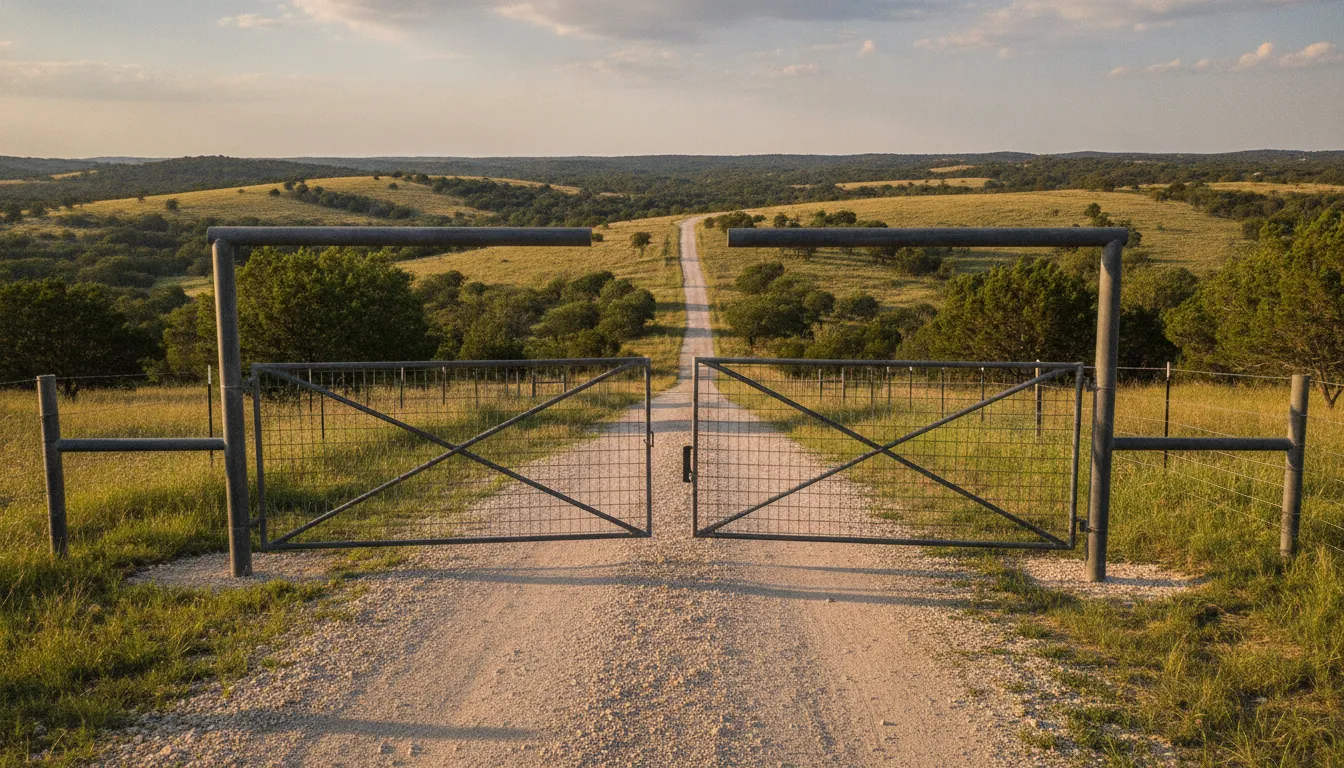
Pipe fencing is a durable, highly visible option, but it generally carries a much higher installed cost. Planning ranges commonly fall around $13.50 to $40 per linear foot. It may make sense near a driveway, homesite, or high-traffic entrance rather than around an entire large tract. A mixed approach can control costs, such as pipe fencing at the entrance and wire fencing along the longer boundary.
Material | Planning cost per linear foot | Best use |
Barbed wire | About $2.95-$4.50 | Large acreage and basic perimeter or livestock control |
4-foot high-tensile woven mesh | About $3.50-$6.00 | Smaller livestock, pets, and tighter containment |
8-foot high-tensile mesh | About $3.75-$5.50 | Taller perimeter or enhanced containment needs |
Pipe fencing, installed | About $13.50-$40.00 | Entrances, homesites, and visible high-traffic areas |
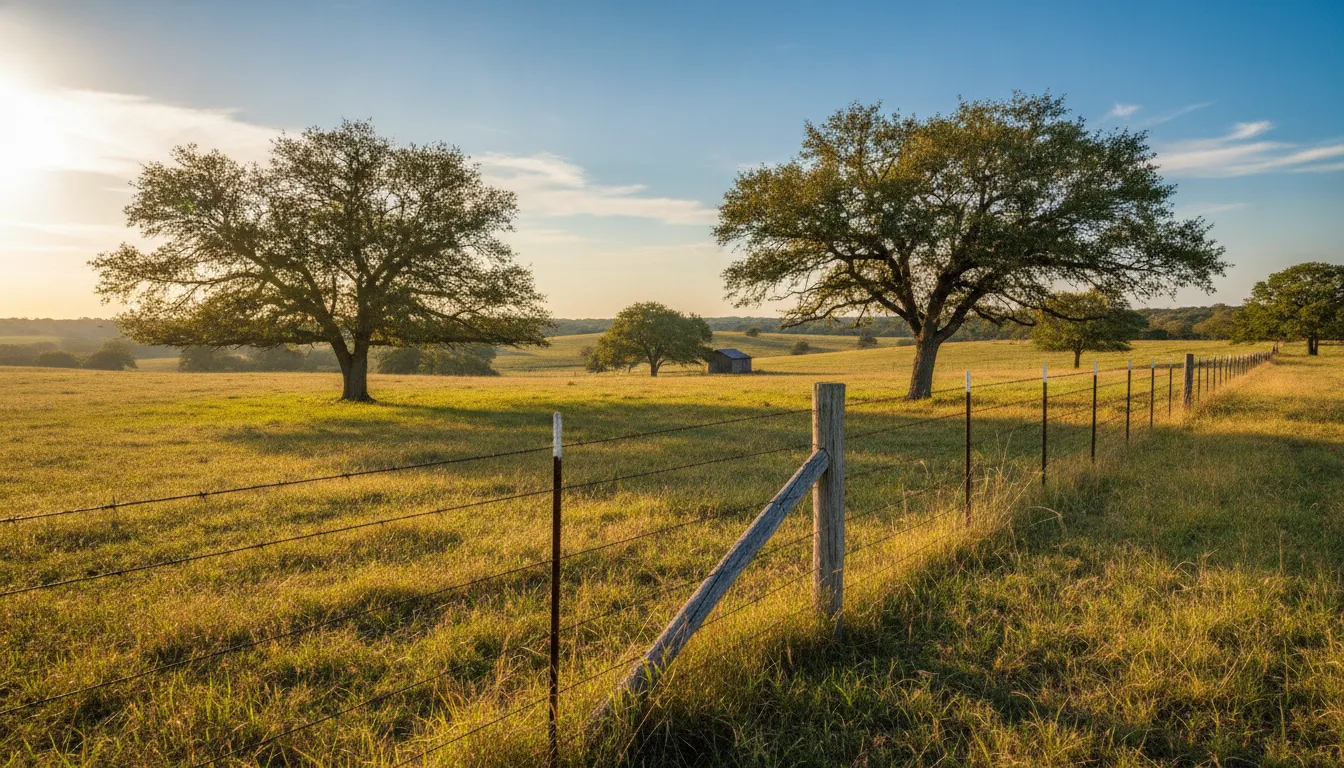
Material is only part of the budget. DIY labor may add roughly $2 to $6 per linear foot when you hire help for portions of the work. While contractor pricing may vary substantially by region and access. Gates commonly cost about $160 to $800 or more each. Corners, additional gates, rocky or wet soil, brush clearing, uneven terrain, and water gaps can all increase the estimate. For a property-specific plan, compare the boundary length with your intended use and verify any county, subdivision, or property restrictions before construction.
These ranges align with published rural and agricultural fencing estimates from Tejas Ranch Fence and HomeAdvisor. Eden Land Company notes that barbed wire is typically the most cost-effective option for large rural acreages. While pipe and other more durable or aesthetic systems increase the cost per linear foot. Actual pricing should be confirmed with local bids.
Where Can You Build? Fencing Laws and Property Lines
Before setting posts or ordering materials, confirm exactly where your property begins and ends. Texas does not use one statewide fence setback that applies to every rural parcel. Placement can depend on the recorded survey, county or municipal rules, subdivision restrictions, and the location of roads, easements, utilities, or neighboring improvements.
A fence that looks close to the line can still cross it. Building without reliable boundary information can lead to an encroachment dispute, litigation, or a requirement to remove and rebuild the fence. The practical first step is to obtain a current, professional land survey and review it before choosing a fence line. If you recently purchased the property, do not assume an old marker, tax map, or informal description is accurate enough for construction.
What should a survey confirm?
Ask the surveyor to identify the corners and boundary lines, recorded easements, rights of way, and any visible conflicts that could affect fencing. Walk the proposed route with the survey in hand. Marking the line clearly can help prevent a crew from placing posts on the wrong side. Especially where terrain, brush, or missing monuments make the boundary difficult to see.
It is also wise to check with the county and, where applicable, the city or homeowners association before building. Local requirements may address permits, road visibility, access, fence height, or appearance. A property may have deed restrictions even when it is outside city limits. These rules can vary by parcel, so verify them for the specific land rather than relying on general advice about rural Texas.
How can you reduce boundary disputes?
Talk with adjacent owners before construction if the route is near a shared boundary. Keep the survey, written approvals, contractor scope, and photos of the marked line with your property records. If the intended fence would sit on or very near the boundary, discuss the plan and maintenance expectations in writing before work begins. For a broader look at ownership considerations, review unrestricted land buying considerations and confirm property-specific requirements with qualified local professionals.
Do You Have to Split the Cost of a Boundary Fence?
Texas is sometimes described as having a "good-neighbor fence rule," but that phrase can create confusion. Generally. A landowner does not have a legal obligation to share the cost of a boundary fence or pay for its future maintenance simply because the fence sits on the dividing line. The Texas State Law Library explains that cost-sharing usually depends on an agreement between the neighboring landowners, rather than an automatic statewide requirement.
That means one owner may choose to build and maintain a fence for a specific purpose. Such as containing livestock, protecting a garden, or marking a boundary, without being able to require the neighbor to reimburse them. The details can change if the owners have already made an agreement, or if deed restrictions, property owners' association rules, or applicable local regulations affect the property.
Put a Cost-Sharing Agreement in Writing
If both neighbors want to share the expense, agree on the important details before construction begins. A written agreement can identify the fence location, the materials and gate design, each owner's share of the initial cost, and who will handle repairs or replacement later. It can also explain how either owner should notify the other before authorizing work.
Written terms help prevent a friendly conversation from becoming a disagreement about what was promised. Keep copies with your property records, and consider asking a qualified Texas attorney to review an agreement when the project is substantial or the boundary is disputed.
Check Local Rules Before Building
Texas counties can adopt local stock laws that affect livestock and fencing responsibilities, so a cost-sharing discussion is only one part of the planning process. Confirm the applicable county and municipal rules, review any recorded restrictions, and make sure the proposed fence location is supported by a current survey. The Texas State Law Library's fence and boundary guidance is a useful starting point, but it is not a substitute for property-specific legal advice.
Before ordering materials or hiring a contractor, talk with the adjoining owner and document the plan. A clear agreement made early is usually easier and less expensive than trying to resolve responsibility after the fence is already in place.
Fence Maintenance and Livestock Liability in Texas
Fence upkeep is more than a property-maintenance task. It can help prevent livestock from crossing boundaries, reduce disputes with neighbors, and catch structural problems before a broken post or washed-out section becomes a larger liability concern. The responsibility for containing livestock depends partly on whether the county follows open-range or closed-range rules.
Open-range and closed-range responsibilities
Texas counties determine whether they are open range or closed range through local stock laws. Those rules affect who is generally responsible for fencing livestock, so a buyer should verify the rule for the specific county rather than rely on a statewide assumption. Texas Agriculture Code Chapter 143 contains primary state laws on fences and range restrictions, while local stock laws can change how those rules apply in practice. Review the Texas Attorney General's explanation of local stock laws before planning a livestock enclosure or boundary fence.
Why regular inspections matter
Walk the fence line after severe weather and inspect it on a regular schedule. Look for leaning or rotted posts, loose wire, damaged gates, gaps under the fence, and branches that could pull a section down. In open-range areas, a property owner may need to fence livestock out. In closed-range areas, the livestock owner may have a greater duty to keep animals contained. Either way, negligence still matters. A knowingly neglected fence, unsecured gate, or failure to address a visible hazard can create problems even when a range rule appears favorable.
Keep records of repairs, inspections, and communications with nearby owners. If you plan to install pool or security perimeter fencing in a property owners' association. A 2021 Texas law limits a POA's ability to prohibit those types of fences, although the association may still regulate appearance. Confirm the declaration and current rules for the property. For more on evaluating community restrictions, see understanding fencing rules before choosing land and budgeting for improvements.
Does Fencing Help You Qualify for an Ag-Exemption?
Fencing can support an agricultural use case, but it is not a shortcut to an ag-exemption. The key question is whether the land is being used for a qualifying agricultural activity at the level of intensity expected in that area.
Maintaining agricultural fencing is commonly considered part of the "degree of intensity" needed to maintain an agricultural exemption for rural land in Texas. A functional fence may help demonstrate that a property is being managed for its stated agricultural purpose, especially when it supports livestock management or another active use. However, a fence by itself does not establish that the land qualifies.
What does "degree of intensity" mean?
Appraisal districts generally look at the complete pattern of agricultural use rather than one improvement. Depending on the property and activity, relevant factors may include the type of agricultural operation. The amount of land in production, stocking or management practices, and whether the use is maintained consistently. Fence condition can be one part of that larger picture, not a replacement for actual agricultural activity.
For example, installing a new perimeter fence on vacant acreage does not automatically turn the property into an active ranching operation. If livestock, grazing, hay production, or another qualifying use is planned, the owner should understand what documentation and management practices the local appraisal district expects. Requirements can vary by county and by the type of agricultural use.
What should buyers verify before relying on an ag-exemption?
Before budgeting for fencing based on a projected tax outcome, contact the county appraisal district that handles the property. Ask about the current status, qualifying uses, degree-of-intensity standards, application deadlines, and records you may need to provide. Confirm the details for the specific parcel rather than relying on a general Texas rule or a seller's description.
An ag-exemption is a property-specific tax matter, and no fence or agricultural plan guarantees approval or continued eligibility. Treat fencing as infrastructure that may support a real land-use plan, while verifying the tax requirements independently before you buy or build.
For a deeper look at how qualifications work before you buy, review this guide to Texas ag-exemption requirements for rural land.
Frequently Asked Questions
What are the fencing laws in Texas for rural land?
Texas fencing responsibilities depend heavily on the county's local stock laws. Before planning a fence, check whether the property is in an open-range or closed-range area, then confirm applicable county and precinct rules. Texas Agriculture Code Chapter 143 is a key source for state fence and range restrictions, but property-specific advice may require a qualified local professional. Review the Texas State Law Library's fence guidance.
How far does a fence have to be from the property line in Texas?
Texas does not have one statewide setback distance for every rural fence. A professional survey should identify the boundary before construction, especially if the fence will sit near a neighbor's property. Also check local ordinances, recorded restrictions, easements, and any written agreement with adjacent owners. Building from an assumed line can create an encroachment dispute or require removal.
Does a neighbor have to pay for a shared fence in Texas?
Generally, no. Texas does not require a neighbor to share the cost or future maintenance of a boundary fence unless that neighbor agreed to do so. Put any cost-sharing, ownership, access, repair, and replacement terms in writing before work begins. The Texas State Law Library explains the general rule.
What are typical fencing costs per linear foot for rural Texas land?
Costs vary by material, terrain, clearing, corners, water gaps, gates, and labor. Planning ranges may run about $2.95 per linear foot for barbed wire, roughly $3.50 for four-foot high-tensile woven mesh, and approximately $13.50 to $40 for installed pipe fencing. Treat these as estimates, request local bids, and compare the fence's purpose with the property's acreage and livestock needs.
Can fencing help qualify rural land for an ag-exemption in Texas?
Maintaining agricultural fencing can be part of the degree of intensity used to evaluate an agricultural exemption, but fencing alone does not qualify land. The property generally must have actual agricultural use at the required intensity, which varies by county and operation. Confirm current requirements with the county appraisal district before relying on an ag-exemption assumption.
Ready to Find Rural Land That Fits Your Fencing Plans?
A clear fencing plan starts with the right piece of land. Eden Land Company has developed and sold rural acreage across Central Texas for more than 40 years, helping first-time buyers and families find property that fits their goals. If you are deciding how to pay, review the owner financing options for Texas land. When you find a tract you like, our team helps you understand which property details to investigate while you confirm the county. Boundaries, restrictions, and local rules before you build.


Comments