
How to Get a Septic Permit for Texas Land
If you are asking how to get a septic permit for land in Texas, start by finding out which local authority handles permits for the property. Then confirm that the site can support an approved on-site sewage facility (OSSF), select a system based on the site and planned use, and submit the required application and design. The process is local, so a permit for one county or city does not automatically tell you what another jurisdiction will require.
What does a septic permit cover in Texas?
In Texas, septic systems are generally regulated as on-site sewage facilities, often shortened to OSSF. A permit is the local approval to install or use a proposed wastewater system under the applicable rules. The reviewing authority needs to know where the system will go, how the property will be used, and whether the proposed design fits site conditions and local requirements.
The Texas Commission on Environmental Quality (TCEQ) explains that permits are required for OSSFs, including septic systems and holding tanks, with exceptions in some circumstances. The first practical question is not which system sounds best. It is which office has authority over the tract and what it requires for that specific application. See TCEQ’s OSSF permit guidance for the state-level overview.
Depending on the area, the permitting authority may be a county or another authorized agent. For example, Travis County publishes a septic permit application page with information about the materials it requests. That page is useful as a local example, not a statewide checklist: requirements can differ by jurisdiction. Start with the authority that serves the land, rather than relying on a neighbor’s permit packet or an old online form.
How do you identify the permitting authority?
Use the property’s exact location and legal description to ask the right office. A mailing address or nearby town name may not identify the regulating authority, especially for rural land. Call or check the official county or local government website and ask which department reviews OSSF applications for that parcel. If you are considering land in a subdivision, ask the seller or land representative for the parcel details and any existing OSSF records, but confirm those records with the authority.
When you contact the office, ask:
Does this office issue OSSF permits for this parcel, or does another authorized agent?
What application form and property documents are required?
Does the authority require a site evaluation, soil information, or a design from a licensed professional?
What system types may be considered for the proposed use?
Which inspections or approvals are required before installation is covered or the system is put into service?
How are application fees paid, and how can you check the current review timeline?
Write down the person or department you spoke with, the date, and the answers. Requirements can change, and a brief call can prevent you from planning around an outdated checklist. For a starting point in one Central Texas jurisdiction, review Travis County’s OSSF permit information, then verify the process for your own property.
What should you confirm about the land before applying?
A septic permit is tied to a particular site and proposed use. Before paying for design work, make sure the basic property information is clear. Gather the legal description, parcel or account number if available, a boundary survey or plat, and a sketch showing the proposed home or other building area. Note any existing driveways, wells, water lines, drainage features, easements, and nearby structures. The permitting authority or design professional can tell you which documents it needs.
Also define the intended wastewater load. A home used year-round may have different design needs from a small cabin used occasionally. The number of bedrooms and expected use can affect system planning, so describe the plan accurately rather than choosing a lower assumed use to simplify an application. If the building layout is not final, say so before a design is prepared.
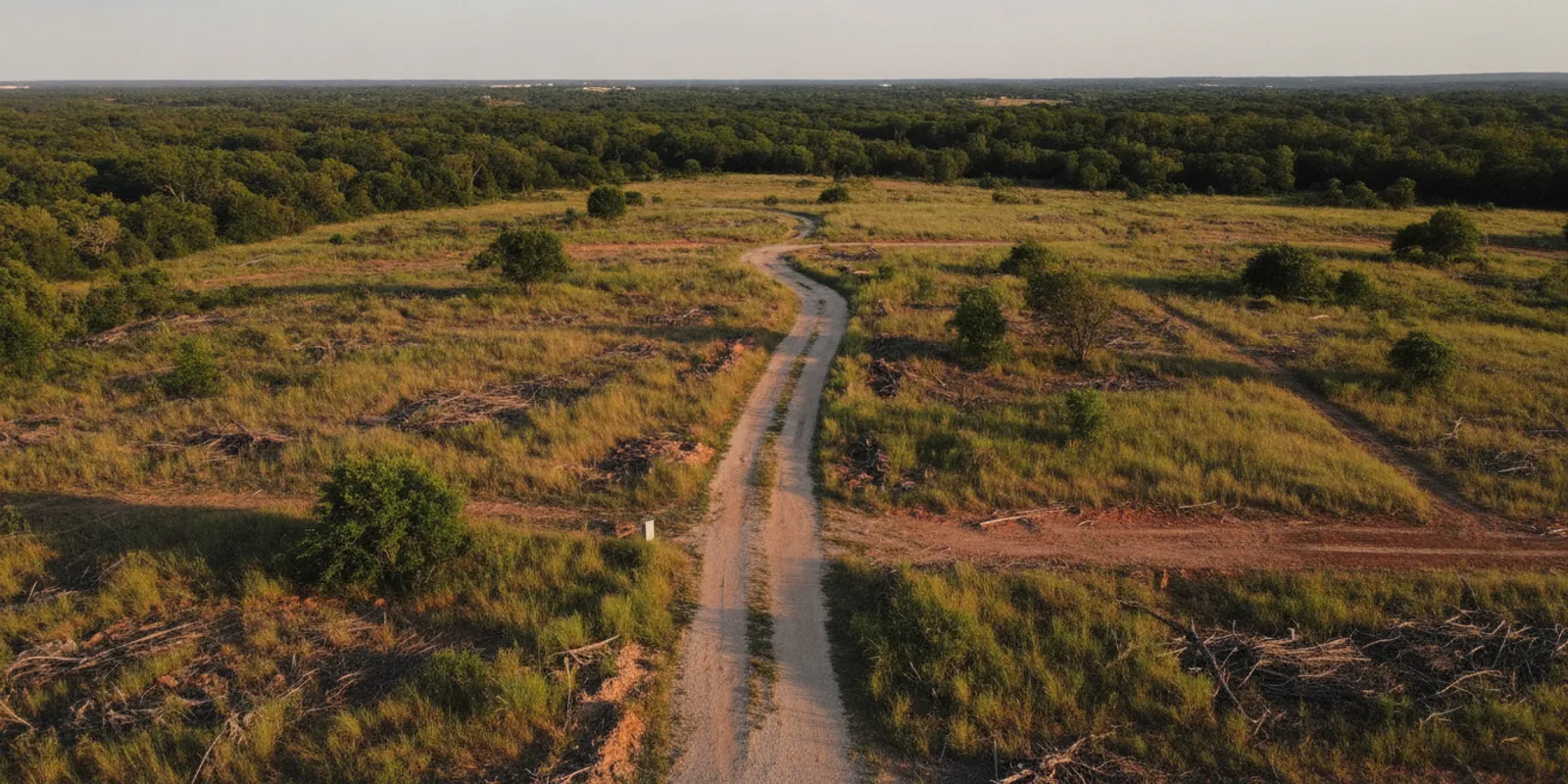
Look at the entire property, not only the most convenient patch of ground. Slopes, shallow or unsuitable soils, surface water, flood-prone areas, trees, access for installation, and the distance to other features can limit where a system and its dispersal area can go. Do not assume an open field is suitable simply because it looks dry. A qualified site evaluator or designer assesses the conditions using the standards that apply in the jurisdiction.
Buyers still comparing tracts may find it helpful to use a broader rural land due-diligence checklist and learn what a Texas land survey can help establish. Those resources do not replace an OSSF evaluation, but they can help you organize property questions early.
How does the site evaluation work?
A site evaluation is an assessment of whether the proposed location and land conditions can support an OSSF design. The required method and who may perform it depend on the applicable rules and the authority’s process. Ask the local office whether it requires a particular evaluation, report, or licensed professional before you hire anyone. Confirm that the person you engage is qualified for the work your authority requires.
The evaluator or designer may need to review the property boundaries, topography, soil characteristics, proposed building location, expected wastewater flow, and required clearances. The result informs the system design and placement. If the initial location does not work, the next step may be to assess another area, revise the building plan, or discuss a different system type. Do not order construction or place a home based on an unverified assumption about where the septic components can go.
Before the visit, provide the property documents you have and mark any planned structures or features. Tell the professional about future plans too, such as a second building, driveway, pool, or potential well. A change to the site plan can affect where components fit. If the property is still under contract, ask whether you can obtain access for evaluation and make the timing and responsibilities clear in writing.
Which septic system might fit the property?
There is no single best system for every Texas tract. The site evaluation, proposed use, local rules, and design determine what is appropriate. Common system categories include a conventional septic tank with a soil absorption area, an aerobic treatment system, and other engineered or alternative designs. The names alone do not establish that a system is allowed or suitable on a particular lot. The authority must review the proposed design.
System or route | What it generally involves | What to verify |
Conventional system | A septic tank and a soil-based area for treated wastewater to disperse. | Whether site conditions, available area, and the authority’s criteria support the design. |
Aerobic treatment system | A treatment unit that uses aeration and may have additional operating components. | Whether it is suitable and approved, plus any required maintenance, service, or operating obligations. |
Alternative or engineered design | A site-specific design considered when standard layouts do not fit the property or rules. | Design qualifications, approvals, installation details, and any ongoing requirements. |
No approved design yet | The site or planned use has not been evaluated sufficiently to confirm a system. | Do not treat the lot as ready for a septic installation; ask what further evaluation or plan changes are needed. |
This table is a planning aid, not a system selection guide. Ask the permitting authority and design professional to explain why the proposed option fits the site, what ongoing duties apply, and what happens if the site evaluation rules it out. If you want to understand the broader budget questions, see our guide to septic system costs on rural Texas land. The permit and system design are specific to the parcel, so costs discussed elsewhere should not be treated as a quote for your project.
How do you submit the permit application?
Once you know the correct authority and have its current checklist, assemble the application as a complete package. The exact documents vary, but a permitting office may ask for an application form, legal property identification, a site plan, information about the proposed building or use, evaluation results, and the system design. Fees, signatures, and professional credentials may also be required. Use the official checklist, not a generic list from another county.
- Get the current application.
Confirm the form, submittal method, fee, and any required appointment or review sequence.
- Prepare the site information.
Use a clear plan that shows the parcel, proposed structures, access, and relevant existing or planned features. Follow the authority’s scale and detail requirements.
- Include the evaluation and design.
Attach the reports and plans prepared by the professionals required for that jurisdiction and project.
- Check for missing items.
Confirm names, parcel identification, signatures, required attachments, and fees before submission.
- Keep copies and track questions.
Save the submitted packet and ask how the authority will notify you about corrections, approval, or inspection steps.
Do not begin installation just because an application has been submitted. Wait for the approvals required by the local process and follow any conditions attached to them. If the reviewer asks for changes, have the designer respond to the specific comments and submit revisions through the authority’s process. Keep approved plans available for the installer and for your records.
What happens after the permit is approved?
Approval is not the end of the process. Confirm which licensed or otherwise qualified installer may do the work, what pre-installation or construction inspections are required, and when the authority must be notified. The approved plans should guide the installation. Any field change should be discussed with the designer and permitting authority before it is made; an adjustment that seems minor can affect compliance or system performance.
After installation, follow the required inspection, completion, or authorization steps before using the system. Ask what records you should retain, including the permit, approved design, inspection documentation, operating instructions, and maintenance records. If the system requires periodic service or monitoring, find out who is responsible and how to document it. Requirements depend on the system and local rules.
Think about access and future property use too. Avoid placing buildings, heavy traffic, or other improvements over system components or the designated dispersal area unless the approved design and authority allow it. Keep the plan with your property documents so future owners and contractors can identify the system location. If you later change the home, add bedrooms, or alter the intended use, check with the authority before assuming the existing permit still covers the change.
How long should you allow for the process?
There is no one statewide turnaround time that applies to every septic permit. Timing can depend on how quickly you identify the authority, schedule the site work, receive the design, submit a complete application, and respond to review comments. Seasonal access, professional availability, local workload, and a need for revised plans can add time. The permitting authority is the best source for its current review estimates.
For a land purchase or construction plan, build in time before you need the system installed. Ask about the order of evaluation, design review, permit approval, installation, and inspection. If you are comparing a parcel with a target move-in date, do not assume that the permit will be approved by a particular date until the authority has reviewed the application. A written schedule from the professionals involved can help you spot dependencies, but it is not a substitute for the authority’s decision.
It is also wise to resolve feasibility before making irreversible commitments. Ask your real estate or legal adviser how to address access for testing, deadlines, and any contingency language in your purchase agreement. The details depend on the transaction, so get advice suited to your situation rather than relying on a general article.
What should a land buyer ask before closing?
When a property is being sold as suitable for a homesite, ask what evidence supports that statement. Request copies of existing permits, approved plans, evaluation reports, and inspection records, if they exist. Confirm that documents refer to the exact parcel and proposed use you have in mind. Then contact the permitting authority to confirm the current status and ask whether a new application or evaluation will be needed for your plan.
Is there an existing OSSF permit, and does it cover the property and intended building use?
Was the system installed and inspected according to the approved plan?
Are there maintenance, operating, or service records to review?
Is the proposed homesite location compatible with the approved septic area and other planned improvements?
If no approval exists, what evaluation and application steps remain?
Are there separate questions about water supply, access, easements, or building approvals?
A septic permit addresses wastewater approval; it does not by itself establish that a tract is ready for every kind of construction. For example, a home plan may also depend on access, water, power, drainage, and local development rules. Our guides to buying land to build a house and drilling a well in Texas cover other due-diligence questions. Buyers considering a manufactured home can also review how to buy land for a mobile home, then verify all property-specific requirements locally.
How can you avoid common permit delays?
Most avoidable problems start with assumptions: using the wrong office, applying with incomplete parcel information, designing around an unconfirmed building location, or expecting a general checklist to fit every county. A few habits make the process clearer:
- Confirm jurisdiction early.
Provide the legal description and ask the appropriate authority to confirm coverage.
- Use current forms and directions.
Older forms or instructions from a neighboring county may not match the current process.
- Coordinate the site plan.
Show the proposed home and other improvements before the design is finalized.
- Ask about required qualifications.
Confirm who must prepare evaluations and plans before hiring a professional.
- Respond to review comments precisely.
Have the designer address the authority’s requested revisions and keep the approval documents together.
- Do not confuse a permit with a guarantee of buildability.
Verify other approvals and site needs separately.
For general land-purchase preparation, you can also read Eden Land Company’s beginner’s guide to buying land. The right next step is still to check the tract with the local permitting office and qualified professionals who know the applicable requirements.
Frequently asked questions
Do I need a septic permit for vacant land in Texas?
A permit is generally associated with installing or operating an OSSF, rather than simply owning vacant land. TCEQ notes that permits are required for OSSFs, with some exceptions. Before planning a system, ask the authority responsible for the parcel what applies to your proposed use.
Can I apply for a septic permit before I buy the land?
You can ask about the process and arrange an evaluation if you have the owner’s permission and the authority accepts an application at that stage. Whether a permit can be issued, and what authorization or documents are needed, depends on the parcel and jurisdiction. Discuss access and deadlines with the seller and your advisers before paying for work.
Can I install the system before the permit is approved?
Do not assume you can. The applicable approval and inspection sequence is set by the authority. Ask what must happen before installation begins and follow the approved plans and instructions.
Does a septic permit mean I can build a house on the property?
No. A septic approval addresses the OSSF proposal. It does not replace other applicable building, access, utility, water, or land-use checks. Confirm those requirements separately for your intended home and parcel.
Where can I find the exact application requirements?
Contact the county or authorized local agent that handles OSSF permits for the property and request its current checklist. TCEQ’s statewide permit guidance is a useful starting point, but the local authority can confirm the forms and steps for a specific tract.
The safest plan is to confirm the authority, evaluate the actual site, and obtain approval before scheduling installation or building around an assumed septic location.

Comments