
Undeveloped Land for Sale Wyoming: What Buyers Should Know
Searching for undeveloped land for sale Wyoming calls for more than comparing acreage and asking prices. A parcel may be suited to recreation but need significant work before it can support a home, or it may look accessible on a map without a documented route across the land between it and a public road. The useful question is not simply whether land is available, but whether a specific parcel fits your intended use and budget after its conditions are verified.
What does undeveloped land mean for a buyer?
“Undeveloped” is a broad description, not a promise about what a buyer can build or do. It generally means that the property lacks some or all of the improvements a buyer may expect, such as a home, driveway, utility connections or a water and wastewater system. One listing may use the term for a remote recreational tract; another may describe a parcel being marketed as a future homesite. Those are not interchangeable situations.
Before falling in love with a listing, translate its description into specific questions. Is there a legal way to reach the tract? What use do you have in mind? Are water, power and wastewater services present, available nearby, or still to be investigated? Are there restrictions or approvals that could affect your plan? Until you have answers, treat words such as “buildable,” “accessible,” “unrestricted” and “utilities nearby” as points to verify, not as a substitute for records or professional advice.
Keep the legal description, parcel map and listing materials together. The listing helps you identify a candidate; it is not a complete due-diligence file. If important information is missing, ask for documents or contact the relevant local authority before making a decision.
How should you define the right Wyoming parcel?
Start with a use statement in one or two sentences. For example: “I want a place for occasional recreation and can accept seasonal access,” or “I plan to build a year-round home and need a feasible path to water, wastewater and power.” This simple exercise helps you screen out parcels that do not meet a non-negotiable requirement.
- For a homesite:
Identify the type and approximate location of the home you have in mind. Ask local officials which land-use and building requirements apply, and get site-specific guidance on access, water, wastewater and preparation.
- For recreation:
Consider how often you will visit, which seasons matter, how you will travel to the property and what activities are permitted. A rough road or distant services may be acceptable for one buyer and a deal-breaker for another.
- For a mobile or manufactured home:
Check placement requirements, any applicable foundation or utility needs, local rules and recorded restrictions. Never assume a parcel allows a particular dwelling simply because a similar home is visible nearby.
- For long-term ownership:
Include recurring taxes, maintenance, travel, road obligations and any applicable association or service fees in your budget. A purchase price alone does not describe the cost of keeping land.
Rank your needs as “must have,” “important” and “flexible.” A documented legal route may be essential; a particular view may be a preference. A tract with no nearby power might still work for a buyer with a carefully researched alternative plan, but not for a buyer who needs a straightforward utility connection. Being explicit about that difference saves time and makes comparisons fairer.
What should you verify before making an offer?
Is access legal, practical and usable when you need it?
Find out how the parcel connects to a public road and what rights allow you to cross any intervening property. A line on a mapping app or a visible track on the ground does not, by itself, establish a legal right to use that route. Request the recorded easement or other access documentation, and determine who may use the route, who maintains it and whether its terms fit your intended use.
Legal access and practical access are separate checks. A documented route may still be difficult for the vehicle, equipment or visitors you expect to bring. Inspect the route where possible, ask about seasonal conditions and confirm who handles maintenance. If the answer affects whether you can use the land, make it a written question for the seller and verify the records independently.
Boundaries need the same care. A fence or tree line can be helpful for orientation but should not be treated as proof of a surveyed property line. Compare the legal description with available mapping and title information. When the exact location of a boundary, driveway or proposed building area matters, ask a qualified surveyor what survey work is appropriate. Eden Land Company's guide to land surveys covers questions buyers can use when discussing boundary work; its Texas context is not a substitute for Wyoming-specific advice.
What are the realistic options for water, wastewater and power?
Do not assume that a nearby line, a neighboring well or a utility pole means a provider can serve the parcel at a reasonable cost. Ask the relevant provider or qualified local professional what service is available at the specific location, what extension or connection work would be required, and whether an estimate can be provided in writing. Ask the same practical questions about communications service if reliable connectivity is part of your plan.
For water, establish what source is possible and which approvals or investigations apply. For wastewater, ask what system could be permitted for the intended use and whether site conditions need evaluation. These questions are connected: the location of a home, access route and service installations may affect one another. Do not budget for a system based only on a neighbor’s arrangement or a general description of the area.
When comparing two properties, mark each item as confirmed, estimated or unknown. “Power at the road” is not the same as a written connection estimate. “Water nearby” does not answer whether a water source can be developed for the parcel. This status list makes uncertainty visible before it turns into an unexpected project.
Do terrain, drainage and ground conditions fit the plan?
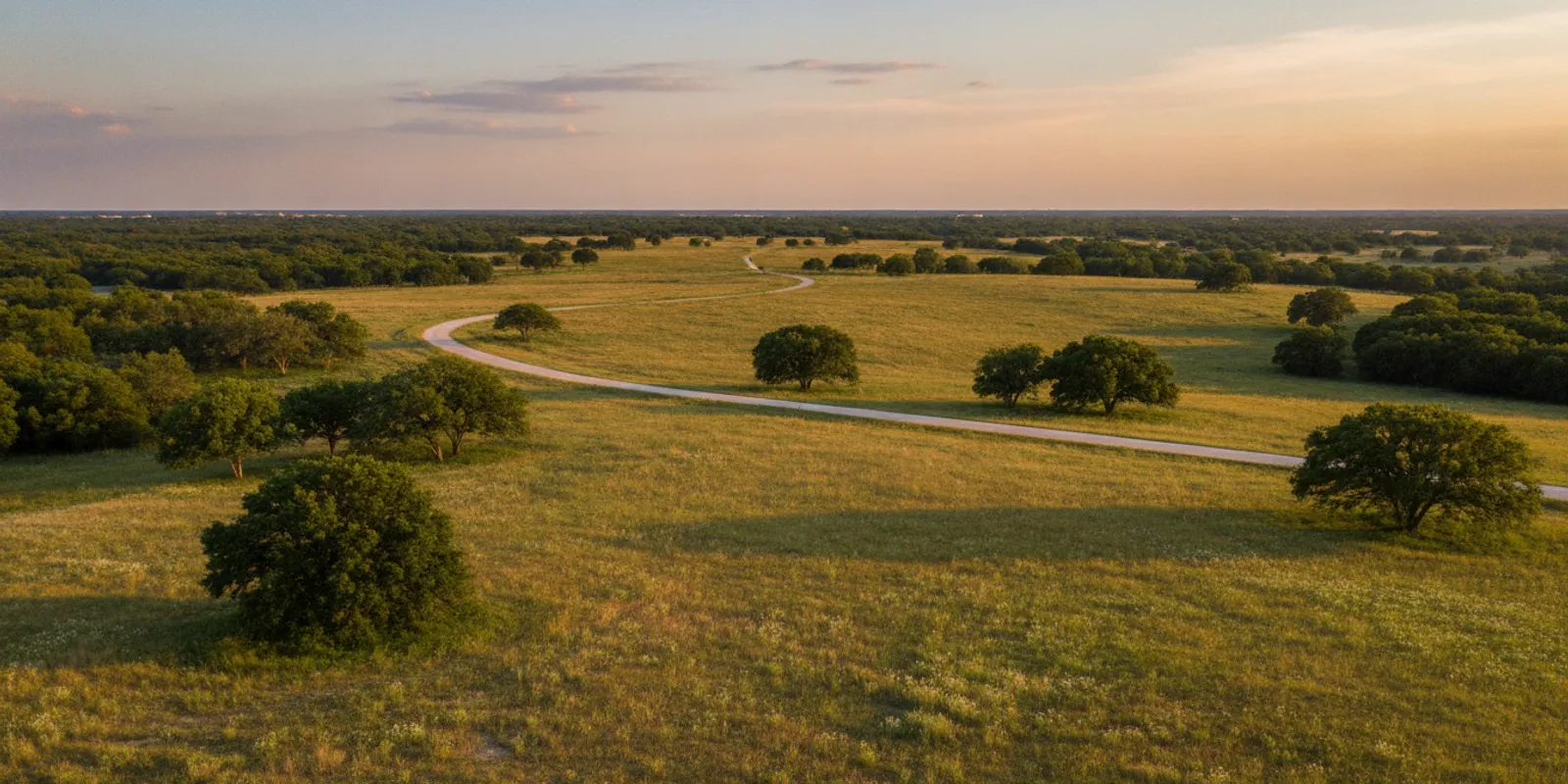
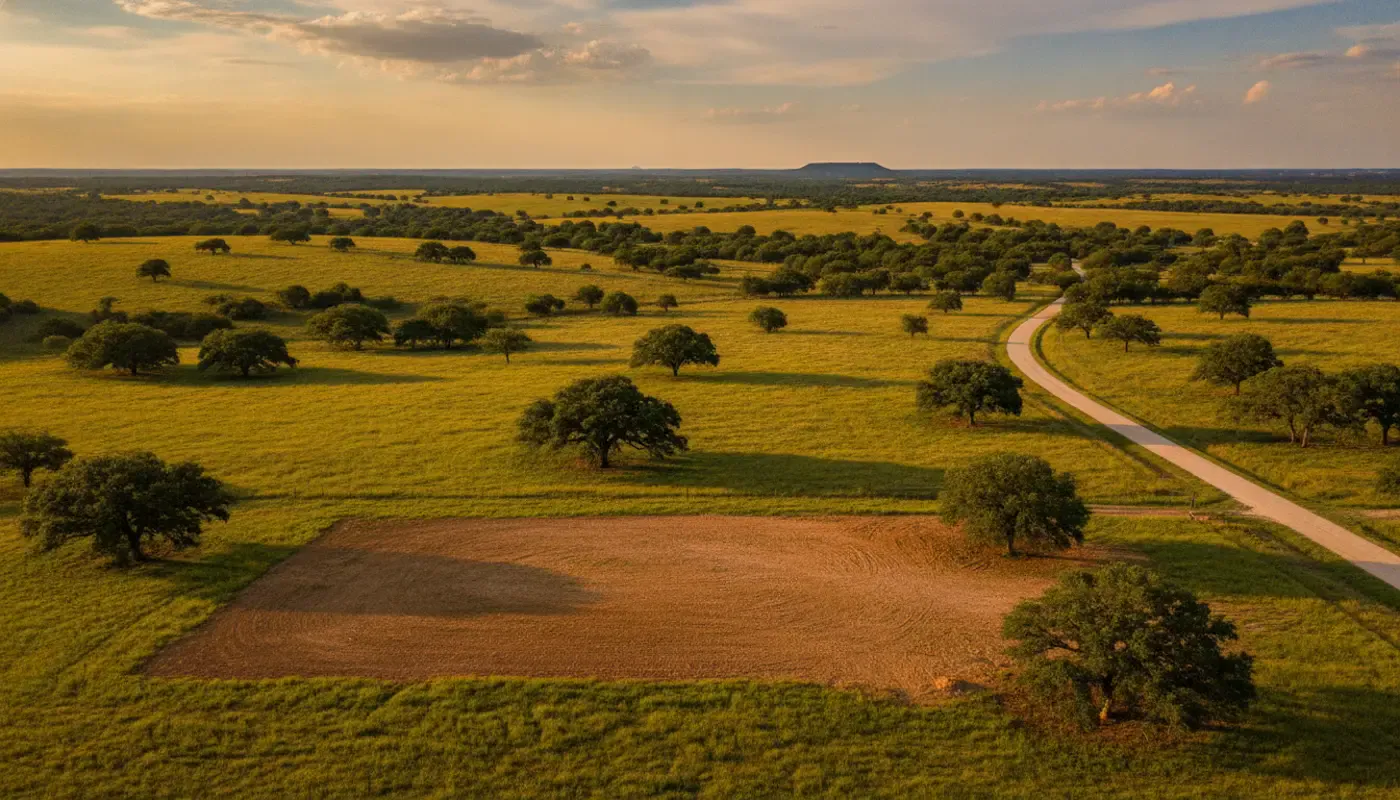
Review slopes, low areas, drainage paths, vegetation and the proposed building or activity area. Aerial images can help you understand the larger setting, but they may not show the details that determine where a driveway or structure could go. Visit the parcel if practical and walk the areas you would actually use. Note where water appears to flow, where vehicles can turn and whether the route from the road to a preferred site is realistic.
For a building plan, seek site-specific input from qualified professionals rather than relying on a broad listing description. The work needed for grading, drainage, a driveway or a foundation depends on the location and the intended design. Ask for estimates tied to the actual parcel and plan. A broad estimate without a site visit may be useful for early screening, but it should not be mistaken for a final project budget.
Which rules, title matters and neighboring uses apply?
Ask the county or municipality with authority over the parcel which land uses, permits, building requirements and environmental considerations apply. Confirm the jurisdiction first; a mailing address does not necessarily establish which local rules govern. Review recorded easements and restrictions, and ask whether any association requirements apply. If mineral rights or another separated property right matters to you, have the title documents explained by an appropriate real estate professional or attorney.
Consider nearby land uses as well as the parcel itself. Roads, working lands, public uses and future changes can affect noise, traffic, access and the experience of owning the site. Do not assume a quiet visit on one day guarantees the same conditions at other times. Ask what is known, then use reliable public records and local sources to verify facts that affect your decision.
How can you compare the full cost of undeveloped land?
Make a parcel-by-parcel budget with the same categories for every candidate. Separate the amount needed to acquire the land from the expense of making it usable and the costs that continue after closing. Actual prices and feasibility vary by location and property conditions, so request estimates for the specific tract instead of relying on a general number.
Budget item | What to confirm | How it affects your decision |
Purchase and closing | Price, title review, closing charges, due diligence and deadlines | Sets the initial cash requirement and purchase conditions |
Access | Recorded rights, easement terms, route condition and maintenance responsibilities | Shows whether you can legally and practically reach the property |
Water and wastewater | Possible source or service, required review, approvals and written estimates | May affect whether your planned use is practical |
Power and communications | Provider availability, distance, connection costs and alternatives | Identifies service gaps and potential additional work |
Site preparation | Survey, clearing, grading, driveway, drainage and building-area work | Reflects the conditions and improvements needed for your plan |
Ongoing ownership | Taxes, upkeep, travel, road costs and applicable fees | Helps you judge the recurring cost after the purchase |
Use a simple comparison worksheet with three columns: confirmed cost, estimated cost and unknown. For example, one parcel might have a confirmed recorded access route but an unknown wastewater solution; another might have an initial provider estimate for power but unclear easement maintenance. The worksheet does not decide which is better. It shows where you need more evidence and lets you compare the risks instead of focusing only on the asking price.
Historical market research should be handled with similar care. The University of Wyoming Agricultural Experiment Station report Wyoming Farm and Ranch Land Market: 1996 - 1998 describes agricultural land sales from that period, and its earlier Wyoming Farm and Ranch Land Market: 1988-90 covers an even older set of sales. These reports are about Wyoming agricultural land, but their dated periods mean they should not be used as current parcel valuations or as a quote for undeveloped residential or recreational land. For a present decision, compare current offerings and obtain local, parcel-specific information.
If a seller offers financing, review the complete written terms rather than focusing on the initial payment alone. Check the amount due, payment schedule, interest, fees, deadlines and consequences of late payment, and ask an appropriate professional to explain any terms you do not understand. Ask which improvements are included in the sale and get important representations in writing.
What questions should you ask the seller and local officials?
Use a repeatable checklist, and record the answer, its source and any documents you still need. A confident verbal response can be useful, but important issues deserve supporting records or confirmation from the responsible authority.
What is the complete legal description, and can I review the title information?
How is access established, and can I see the recorded easement or other supporting documentation?
Who maintains the route, and what obligations or costs apply to an owner?
Which water, wastewater, power and communications services are actually present, and which providers have confirmed availability?
What uses and structures are allowed by the applicable authority, and where can I confirm those rules?
Are there recorded restrictions, easements, unpaid obligations or association requirements to review?
What improvements are part of the sale, and which items would remain my responsibility?
Can I arrange an inspection and speak with qualified local professionals before closing?
What contingencies, deadlines and document-review periods would apply under the proposed agreement?
When an answer is vague, ask a narrower question. Instead of “Are utilities close?” ask which provider serves the location, where the nearest service point is, whether service can be extended and whether the provider will supply a written estimate. Instead of “Can I build?” ask which authority determines the permitted use and what information it needs to evaluate the intended structure. Specific questions are easier to verify and compare.
What is a careful process from search to decision?
- Write down the intended use.
Define the activity, structures, access needs, service expectations and seasons that matter. Separate must-haves from preferences.
- Screen listings for deal-breakers.
Check location, parcel size, stated access and any missing information. Remove candidates that plainly conflict with an essential need, but keep uncertain items on a verification list rather than assuming the answer.
- Confirm identity and access.
Match the parcel to its legal description and verify how it connects to a public road. Obtain relevant records and establish responsibility for any shared route.
- Contact the appropriate local sources.
Confirm jurisdiction and ask about intended use, permits and applicable requirements. Contact service providers and qualified professionals about water, wastewater, power and site conditions.
- Inspect and price the work.
Visit when practical, note terrain and route conditions, and request estimates tied to the parcel. Update your comparison worksheet as unknowns become confirmed facts or estimates.
- Review title and purchase terms.
Understand documents, contingencies, closing costs, financing terms and deadlines before signing. Seek professional help for legal, title, engineering or land-use issues that are outside your experience.
A useful rule is to avoid letting a deadline substitute for due diligence. If a purchase only makes sense when an unverified assumption is true, treat that assumption as an open risk. Find out whether you can verify it before committing, and understand what options you have if the answer is not what you expected.
Buyers comparing parcels in other regions may find Eden Land Company's rural land buying checklist, acreage buying guide and guide to evaluating lots for a home useful as general question prompts. These resources do not replace the records or rules for a Wyoming parcel. If a mobile or manufactured home is part of your plan, the mobile-home land guide can help organize the issues to investigate, but local rules still control the specific property.
When is Eden Land Company relevant to a Wyoming search?
Eden Land Company's described property focus is rural acreage in Central Texas, not Wyoming inventory. This guide does not claim that the company has Wyoming land for sale. If your search is specifically for a Wyoming parcel, keep your due diligence centered on the county, property records, local authorities and qualified professionals familiar with that location.
If you are also considering Central Texas as a separate option, review Eden Land Company's property information and check each property's location, details and applicable terms directly. The company's about page provides background, while its guide to buying land without an HOA discusses questions that may be useful when evaluating restrictions. For a Texas property inquiry, you can use the property showing and tour page. These are separate Texas resources, not evidence about land in Wyoming.
Frequently asked questions
Does “undeveloped” mean I can build a home?
No. The word alone does not establish that a home is allowed or that a site can support one. Confirm applicable land-use and building requirements with the authority that governs the parcel, and investigate access, water, wastewater, power and site conditions for the intended design.
Is a road shown on a map proof of legal access?
No. A map or visible track may help you understand the area, but it is not necessarily proof of a legal right to cross another property. Ask for the recorded access information, review its terms and verify practical conditions as well.
Can a neighboring well or utility connection serve the parcel?
Not necessarily. A nearby service or neighboring arrangement does not confirm that a provider can serve the property or that a new system is feasible. Ask the relevant provider or qualified local professional for parcel-specific guidance and written estimates where available.
How should I compare asking prices?
Compare more than the listed amount. Put purchase and closing costs, access, service needs, site preparation, ongoing ownership expenses and unresolved questions in the same worksheet for each parcel. Historical reports or broad estimates are not substitutes for current, location-specific information.
The soundest decision comes from matching the parcel to a defined use, documenting what is known and resolving the costly unknowns before you commit.
Comments