
Subdivision Lot vs Raw Land Texas: Which Is Right for Your Homestead?
Updated: Sep 15
If you are searching for Central Texas land. You have probably come across two very different options: a lot inside a planned subdivision and a piece of raw, undeveloped acreage. One offers convenience and ready-to-use infrastructure. The other gives you privacy, space, and full control. This guide walks through the real trade-offs between a subdivision lot and raw land in Texas so you can decide which path matches your homestead plans.
Ready to explore your options? Browse buildable lots with utilities ready to connect or view all available properties from Eden Land Company to find the right parcel for your needs.
Subdivision Lot vs Raw Land Texas: What Exactly Is a Subdivision Lot vs Raw Land in Texas?
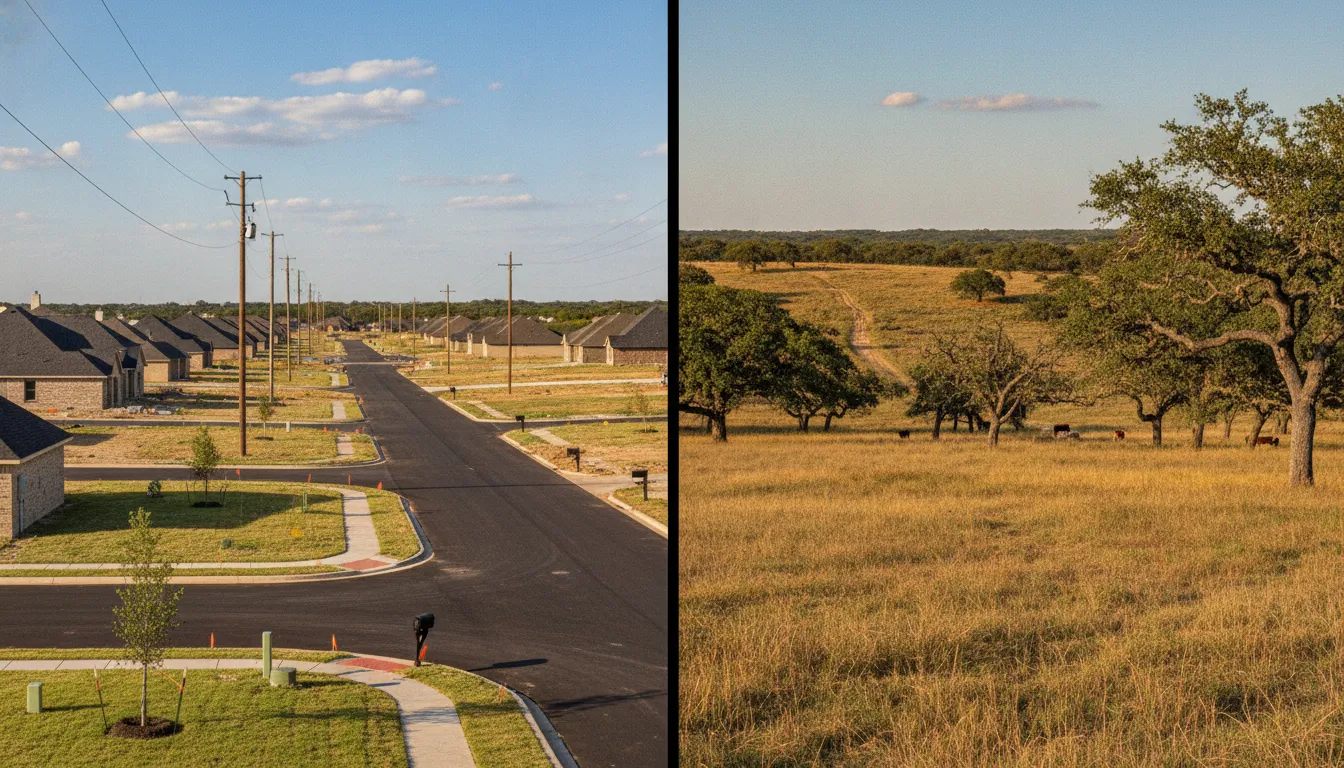
A subdivision lot is a platted parcel with surveyed boundaries, road access, and utility infrastructure already planned out, while raw land is undeveloped acreage with no improvements, utility connections, or boundary markers. The choice between them determines your timeline, budget, and level of control.
Subdivision Lots
A subdivision lot is a platted parcel within a larger tract that has been divided into smaller pieces for residential development. In Texas, when a landowner splits property into two or more parts for sale, they generally must file a subdivision plat for approval. This process is governed by local rules, including the Texas Model Subdivision Rules, which require lots of five acres or less to have adequate water supply and sewer services. These lots come with surveyed boundaries, dedicated road access, and utility infrastructure already planned out.
Most subdivision lots sit inside a planned community with shared amenities, established roads, and utility connections near the property line. You pay a premium for this convenience, but you also skip the long and costly process of bringing utilities to a raw site.
Raw Land
Raw land, sometimes called undeveloped or unimproved land, is acreage that has not been platted, surveyed into lots, or connected to utilities. There are no roads, no water lines, no septic systems, and often no clear boundary markers. What you get is the land itself, exactly as nature left it.
In Texas, raw land gives you far more freedom to decide how to use the property. You can build where you want, keep livestock, park an RV, or leave the land untouched. But that freedom comes with responsibility. You must arrange for permits, utility installation, road building, and compliance with county regulations. It is worth noting that a subdivision plat is not the same as zoning in Texas. Even on a platted subdivision lot, you may need to go through a rezoning process if you want to change the allowed land use.
Not sure which type fits your needs? View properties for sale and see what is currently available in Central Texas.
How Do Costs Compare Between a Subdivision Lot and Raw Land?
Subdivision lots cost more upfront but include utility infrastructure in the purchase price. Raw land costs less per acre but requires you to pay for well drilling, septic installation, power connections, and road building out of pocket. The total cost of ownership can swing in either direction depending on what the land needs.
Purchase Price
Raw land almost always costs less per acre than a subdivision lot. A raw five-acre tract in Central Texas may sell for a fraction of what a half-acre subdivision lot costs. That lower entry price makes raw land attractive for buyers on a tighter budget. But the savings on the front end often get eaten up by development costs on the back end.
Development Costs
Bringing raw land to a buildable state costs real money. Typical development expenses include:
- Water well drilling:
$5,000 to $15,000 depending on depth and bedrock.
- Septic system installation:
$4,000 to $10,000.
- Electric utility connection:
A few hundred dollars up to $30,000 or more if the nearest power line is far away.
- Driveway or access road:
$5,000 to $20,000.
Together, these costs can easily reach $20,000 to $75,000 or more before you pour a single foundation.
Subdivision lots include most of these costs in the purchase price. The water, sewer, electric, and road access are already in place. Septic system costs and electricity hookup costs in raw land scenarios can add up quickly, but subdivision buyers face fewer surprise expenses later.
Hidden Costs
Raw land may also come with ongoing costs that subdivision lots do not. You may need to pay for brush clearing, fencing, soil testing, and land surveys. If the property is in a flood zone, you may need flood insurance. And if you plan to hold raw land for a while before building, you will still need to pay property taxes. On the positive side, raw land may qualify for agricultural or wildlife management tax exemptions in Texas, which can lower your annual tax bill significantly. That option is rarely available for small subdivision lots.
Compare financing options for both land types. Learn how to buy undeveloped land with flexible owner financing that works for your budget.
What Utilities and Infrastructure Come With Each Option?
Subdivision lots come with utility connections ready at the property line, while raw land requires you to arrange and pay for every utility from scratch. This difference affects not just your budget but also how quickly you can start building.
Subdivision Lots: Ready to Connect
Subdivision lots come with utility infrastructure already at or near the property line. Water lines run along the street. Sewer connections are stubbed out. Electric meters are ready to activate. In many newer subdivisions, natural gas, fiber internet, and even cable television are already in place. For buyers who want to start building fast, this is a major advantage. You call the utility companies, pay the connection fees, and you have service within days or weeks.
Raw Land: You Build It Yourself
With raw land, nothing is connected. You must arrange everything from scratch. That means calling well drillers to find water. It means getting a septic permit from the county and hiring an installer. It means contacting the electric cooperative to see how far the nearest power pole is and how much it will cost to bring power to your site.
Texas law requires that subdivision lots of five acres or less have adequate water and sewer services. For raw land, that burden falls entirely on you. There are no guarantees that water is available at a reasonable depth or that the soil will perk for a septic system until you test it. Checking utilities before buying land is a critical step for raw land buyers. You should also read our guide on getting electricity to rural land to understand what to expect.
Timeline Impact
The utility gap translates directly into a timeline gap. A subdivision lot buyer can often break ground within weeks of closing. A raw land buyer may wait 6 to 12 months just to get water, power, and septic in place. If you are in a hurry to build, a subdivision lot saves you time. If you have patience and want to control every detail, raw land gives you that freedom.
What About Restrictions, HOAs, and Land Use?
Subdivision lots come with restrictive covenants and HOA rules that limit what you can do with your property, while raw land gives you broad freedom. The trade-off is between neighborhood consistency and personal control.
Subdivision Restrictions and HOAs
Most subdivision lots come with restrictive covenants that run with the deed. These rules control:
What you can build and what materials you can use.
What colors you can paint.
What kind of fence or landscaping is allowed.
Whether you can park an RV, keep chickens, or set up a mobile home.
Many subdivisions also have a homeowners association that collects monthly or annual fees and enforces the rules. An HOA can keep the neighborhood looking consistent and protect property values, but it also limits what you can do with your own land.
If you want to park an RV, keep chickens, build a workshop, or set up a mobile home, many subdivisions will not allow it. Some prohibit certain breeds of dogs, limit the number of vehicles you can park outside, or require approval for any exterior change. It is important to read the covenants before you buy.
Raw Land: Freedom With Limits
Raw land gives you far more control. There is no HOA board to approve your plans. No one tells you what color to paint your house or whether you can keep livestock. You can build a barndominium, a tiny home, or a traditional house. You can park an RV, set up a mobile home, or leave the land as a weekend retreat.
That said, raw land is not completely unrestricted. Texas counties have zoning rules, sanitation codes, and building permit requirements. You must still follow setback requirements, obtain permits for structures, and meet health department standards for water and septic. And while a subdivision lot is already platted for residential use, raw land may need a zoning change or a variance before you can build. Our guide to the Texas ag exemption explains how raw land owners can lower their tax burden, and the Texas homestead exemption page covers additional tax benefits for rural property owners.
See what land is available with the freedom you want. Browse Central Texas properties from Eden Land Company.
How Does Financing Differ for Subdivision Lots vs Raw Land?
Financing a subdivision lot is easier through traditional banks because the improved land represents lower risk. Raw land is harder to finance through conventional lenders but becomes accessible through owner financing with lower down payments and no credit checks.
Traditional Bank Loans
Banks are more willing to lend on subdivision lots than on raw land. A developed lot with utilities, road access, and a surveyed boundary looks like lower risk to a lender. You may qualify for a conventional mortgage or a construction-to-permanent loan if you plan to build right away. The appraisal is straightforward because comparable lots exist nearby.
Raw land is much harder to finance through a traditional bank. Lenders see undeveloped land as high risk. There are no comparable sales for easy appraisals, no utility connections to verify value, and no guarantee of when or if the buyer will build. Interest rates on raw land loans are typically higher, down payment requirements are larger (often 30 to 50 percent), and the loan terms are shorter. Many banks simply do not offer raw land loans at all.
Owner Financing: A Flexible Alternative
Owner financing changes the equation for both types of land. With owner financing, the seller acts as the bank. You make a down payment and monthly payments directly to the seller. There are no bank credit checks, no rigid income requirements, and no long approval waits. Owner financing vs bank loan options make land ownership accessible for buyers who would not qualify through traditional lenders.
Eden Land Company offers owner financing on both subdivision lots and raw land with down payments as low as 5 to 15 percent. This makes raw land just as accessible as a subdivision lot for buyers who want the flexibility of undeveloped acreage. No credit check is required. The terms are clear and set directly with the seller, so you know exactly what you are agreeing to from the start.
Ready to take the next step? Explore available properties with flexible owner financing today.
Which Option Is Right for You? A Decision Framework
The right choice between a subdivision lot and raw land depends on your budget, timeline, privacy needs, and how much control you want over your property. Use the comparison table and the guidelines below to decide.
Factor.. | Subdivision Lot.. | Raw Land.. |
Timeline to build. | Weeks to months. | 6 to 18 months. |
Privacy level. | Low to moderate. | High. |
Upfront cost. | Higher purchase price. | Lower purchase price. |
Development cost. | Minimal (included). | $20,000 to $75,000+. |
Monthly fees. | Possible HOA dues. | None. |
Restrictions. | Covenants and HOA rules. | County zoning only. |
Flexibility. | Limited by neighborhood rules. | High. |
Financing ease. | Easier with banks. | Harder with banks. |
Tax exemption potential. | Low. | High (ag exemption). |
Best for. | Fast builders, families, move-in ready. | Homesteaders, RV owners, privacy seekers. |
When to Choose a Subdivision Lot
You want to build a home quickly with minimal hassle.
You need a neighborhood setting with schools, utilities, and services nearby.
You plan to use a traditional mortgage or construction loan.
You prefer predictable monthly costs without surprise development expenses.
When to Choose Raw Land
You value privacy, space, and control over your property.
You want acreage for gardening, livestock, or weekend getaways.
You plan to use owner financing to avoid bank requirements.
You want to take advantage of Texas ag exemptions to reduce property taxes.
Frequently Asked Questions
What are the main utility costs for raw land compared to a subdivision lot?
Buying raw land requires you to pay for all utility setups yourself. Drilling a fresh water well in Central Texas often costs $10,000 to $25,000, and installing a septic system adds another $8,000 to $15,000. Connecting to the local power grid can cost several thousand dollars more if the nearest pole is far away. Subdivision lots usually have these services ready at the property line, which saves you these large upfront expenses.
Is a subdivision lot or raw land better for immediate building?
A subdivision lot is usually better if you want to build a home right away. These lots almost always have access to electric lines and water systems. You also avoid the long wait times for county permit approvals. In contrast, raw land can take many months to prepare because you must run power lines, drill a private water well, and install a custom septic system before construction begins.
Does raw land in Texas have fewer restrictions than a subdivision lot?
Yes, raw land generally has far fewer restrictions than a subdivision lot. Most subdivision lots are governed by a homeowners association or strict deed covenants that control your home size, building materials, and animal rules. Raw land gives you more freedom to camp, park an RV, raise livestock, or build a tiny home. However, you must still follow local Texas county sanitation rules and basic safety codes.
Can you get owner financing for both types of land in Central Texas?
Yes, you can get flexible seller financing for both land types, especially when buying directly from an experienced developer. Traditional banks rarely lend on undeveloped acreage, but owner financing makes both raw land and subdivision tracts accessible. This route lets you skip strict bank credit checks and secure your property with a low down payment, clear terms, and direct access to the seller.
Ready to find the right land for your Texas homestead?
Delaying your search for rural land in Central Texas can mean missing out on premium acreage. Lot values continue to rise, and the best tracts sell quickly. Starting your path to land ownership today secures your piece of Texas before prices climb further.
Ready to explore buildable lots and available properties? Explore buildable lots and available properties to get started.


Comments