
Title Insurance for Land in Texas: Buyer Guide
Updated: Sep 15
Buying rural acreage is exciting, but a hidden ownership claim can put your plans and investment at risk. Title insurance for land in Texas helps protect buyers from certain past title defects that a records search may not uncover.
Title insurance for land in Texas can protect a buyer from covered ownership defects that began before closing, such as undisclosed liens, forged documents, or public-record errors. Texas generally does not require cash buyers to purchase an owner's policy, but buyers should review the title commitment and policy options before closing.
Confirming the legal status of your property is only one part of a smart purchase. To find the right site for your goals, you must know what should you look for in land for sale near Cuero TX. The path begins with
Do you need title insurance for land in Texas?
Do you need title insurance for land in Texas? The short answer is that state law does not require it. But most buyers find it is a key tool for a safe deal.
Whether you must get it often depends on how you pay for your land. If you take out a loan, your lender will likely make you buy a loan policy. This protects the bank's money if there is a problem with the title.
Protection for cash and financed buys
When you use a bank to buy land, they want to know their money is safe. Lenders require a loan policy to cover the amount of the mortgage. This policy only protects the lender, not you.
To protect your own stake, you would need an owner's policy. Many first-time buyers find that understanding title insurance helps them close the deal with more trust. An owner's policy guards you against past events that could hurt your rights to the land.
For those who buy with cash, skipping insurance might seem like a way to save money. But this move leaves you open to all kinds of legal threats. Without a policy, you are on your own if a long-lost heir claims the land. The cost of a one-time premium is often much lower than the price of a court battle.
Why land history matters in Texas
Rural land in Texas often has a long and complex history. Some plots have changed hands many times over a hundred years. Title insurance for land in Texas helps you see these details before you buy.
This check helps make sure the person selling the land truly has the right to do so. It also finds hidden issues like old land grants or missing heirs. Knowing these facts upfront is a vital part of protecting your land title from future surprises.
Easements are another common issue with rural acreage. These are rights for others to use a part of your land for things like power lines or road access. A title search finds these items in public records so you can see any limits on how you can use your new property.
Managing risks with an owner's policy
An owner's policy covers the full price you paid for the land. It stays in effect for as long as you or your heirs own the property. You only pay for it once at the time of closing. This makes it a great value for long-term land owners.
If a problem pops up later, the insurance company will step in. They will pay for your legal defense in court. They also pay for any losses covered by your policy. This safety net is a key reason why experts suggest getting full coverage.
In Texas, the state sets the rates for these policies. This means you will pay the same price no matter which title company you choose. You can focus on picking a team that gives the best service.
What title insurance generally covers on rural land
Title insurance generally covers certain ownership defects that existed before closing, such as undisclosed liens, recording errors, forgery, or competing ownership claims. Coverage depends on the policy, endorsements, and listed exceptions, so buyers should review the commitment before closing.
Common title defects and hidden risks
Title insurance for land in Texas works in a different way than other types of insurance. Most policies protect you from things that might happen in the future. Title insurance protects you from problems that happened in the past. It is a contract that shields you from money loss if there is a defect in your land title.
A title company will search public records to find any issues before you buy the land. This search helps find any legal claims like unpaid taxes, old mortgages, or mechanic's liens. These issues can include old claims that were not found during the first search. But even a good search can miss some items.
Title insurance covers hidden risks that a search might not find. These can include:
Errors in public records or wrong land details
Fake names or forged deeds on land papers
Claims from heirs of past owners
Unpaid bills from past workers
This protection ensures you are not held liable for mistakes made years before you owned the land. It also protects you from someone else claiming they own your land.
Unique issues for rural property
Rural land often has a complex past that can lead to unique title problems. In Texas, mineral rights are often apart from the surface rights. This means you might own the land but not the oil or gas beneath it. Title insurance helps you check what you really own and what has been sold to others in the past.
This is key for buyers who want to build a home or start a farm. You should also check the list of exceptions in your policy. These are items that the title company will not cover. Common exceptions for rural land include utility easements or old rules about how you can use the land.
When understanding title insurance, it is vital to read Schedule B in your commitment. This section lists all the rights that other people may have to cross your land. It might include rights for power lines, water pipes, or paths for neighbors.
Financial and legal protection
An owner's policy mostly covers up to the full price you paid for the land. This protection stays in place for as long as you or your heirs own the land. It is a one-time cost paid at the start, but the help lasts for years.
If someone challenges your ownership, the title company will pay for your legal defense in court. They will also pay for any covered losses up to the policy limit. The cost of title insurance in Texas is set by the state.
This means the price will be the same no matter which title company you use. You pay this fee only once when you close on the land. While you cannot shop for a lower price, you can choose a company that gives you the best help.
You may also be able to save money by asking the seller to pay for the policy. Buying land is a big step for your family. Title insurance gives you peace of mind by managing the risk of buying acreage. It ensures that the seller has the legal right to transfer the land to you.
Without this cover, you could face high legal bills if a hidden owner shows up later. It is a key tool for anyone buying land to build wealth for the next generation.
Owner policy vs. lender policy
An owner's policy protects the buyer's interest in the land, while a lender policy protects only the lender's loan balance. A financed purchase may require a lender policy, but that policy does not replace coverage for the buyer's equity.
When you buy land, you will see two main types of title insurance. One keeps you safe as the buyer. The other keeps the person or bank giving you the loan safe. In Texas, the Texas Department of Insurance sets the rates and rules for both. These policies look for old errors that could harm your rights to the land. But they have distinct goals and look out for other people. You should know how each one works before you close on your deal.
Keep your own money safe
An owner policy is for you. It covers the full price you paid for the land. If someone makes a claim on your land due to an old error, this policy helps. It will pay for a legal team or cover your loss in cash. This safety stays with you for a long time. It lasts as long as you or your heirs own the land. Even if you sell the land later, the policy might still offer some help for past claims. While Texas law does not force you to get it, it is a smart move. It is a key part of understanding title insurance when you buy rural land. This policy makes sure the money you put into the land is safe from past mistakes or hidden liens.
Protect the lender interest
A lender policy is for the party that gives you a loan. Most banks and sellers will not give you a loan without it. This policy only covers the amount of the loan that you still owe. As you pay off your debt, the amount it covers goes down. Once you pay the loan in full, this policy ends. It does not look out for you or your money. It only makes sure the lender does not lose cash if the title has a flaw. In one case, a tax lien from ten years ago could pop up. Then, the lender policy pays the bank what you owe. It does not help you get your home or land back. This is why you cannot rely on the lender's policy alone.
Feature | Owner Policy | Lender Policy |
Who it protects | The land buyer and their heirs | The bank or lender |
How long it lasts | As long as you own the land | Until the loan is paid off |
Is it needed? | It is your choice | Often needed for a loan |
Coverage amount | Full price of the land | The current loan balance |
Equity safety | Protects your down payment | Does not protect your equity |
Know the risk to your equity
It is vital to know that a lender policy does not save your equity. Equity is the value of the land that you truly own. If a title issue takes the land away, the lender policy pays the bank. It does not pay you back for your down payment. It also does not pay you back for the monthly payments you made. For many buyers, the down payment is a huge part of their life savings. Losing that money can be a big blow to a family. To keep your own money safe, you need an owner policy. This is why protecting your land title is a top step for any new buyer. By having both policies, you and your lender are both safe.
How to review title before buying Texas land
Before buying Texas land, compare the title commitment's legal description with the property you expect to buy. Then review requirements, exceptions, easements, liens, access rights, and restrictions with the title company and qualified professionals before closing.
Buying land is a big move. Before you sign the deal, you must check the land title. This step makes sure that the person selling the land truly owns it. It also shows if there are hidden issues that could cause trouble later.
In Texas, the title firm will give you a file called a title commitment. This is a promise to give you title insurance for land in Texas once you meet certain goals before the sale. Checking this file is the best way to avoid costly court fights later on.
Check the title commitment
The title commitment is the map for your title review. It lists all the things the title firm found in public records. You should look at the name of the owner and the legal description of the land.
Make sure the land you buy matches the records. If there are errors in names or land notes, the title firm must fix them. This guards you from future claims. You can learn more about understanding title insurance and how it keeps your money safe.
Review schedules and rules
Most of the vital details are in the schedules. Schedule B is very key. It lists what the policy will not cover. These items are called exceptions.
They often include things like power lines or local rules. For example, a utility firm might have the right to run lines across your lot. You should also check for mineral rights.
In Texas, surface rights and mineral rights are often split. This means you might own the top of the land, but not the oil or gas deep below. Using an owner's policy is a smart way of protecting your land title from these hidden risks.
- Read Schedule A first.
This part shows the legal description of the land and the current owner. Check that the land size and the seller's name match your contract exactly.
- Look for liens in Schedule C.
This list shows items that must be cleared before the sale. It may include unpaid taxes or old loans that the seller needs to pay off first.
- Scan Schedule B for easements.
This section lists the rights other people have to use your land. Look for paths, power lines, or pipes that might limit where you can build.
- Verify access to the land.
Check if the property has a legal way to reach a public road. Some rural land has no road access, which means you would need a new easement to get to your gate.
- Confirm mineral rights.
Review the records to see if the mineral rights are split. If they were sold years ago, someone else could have the right to drill for oil on your land.
- Examine the survey.
Compare the title report to a recent land survey. This helps you find any fences or sheds that might be over the property line.
Get expert help when needed
Title files can be hard to read. If you find something you do not know, do not ignore it. You should ask your title officer for a clear talk about any claims.
If the issues seem hard, like a fight over a land line, you may need a lawyer. The Texas Department of Insurance notes that title insurance guards you from loss due to title flaws.
This includes problems like fake deeds or secret liens that a search might miss. Dealing with these facts now will give you peace of mind once the land is yours.
Title issues that matter most for rural acreage
For rural acreage, title review should focus on legal access, boundary conflicts, easements, mineral-right reservations, unpaid taxes, heirship claims, and deed restrictions. These issues can affect ownership or use even when the land looks suitable during a visit.
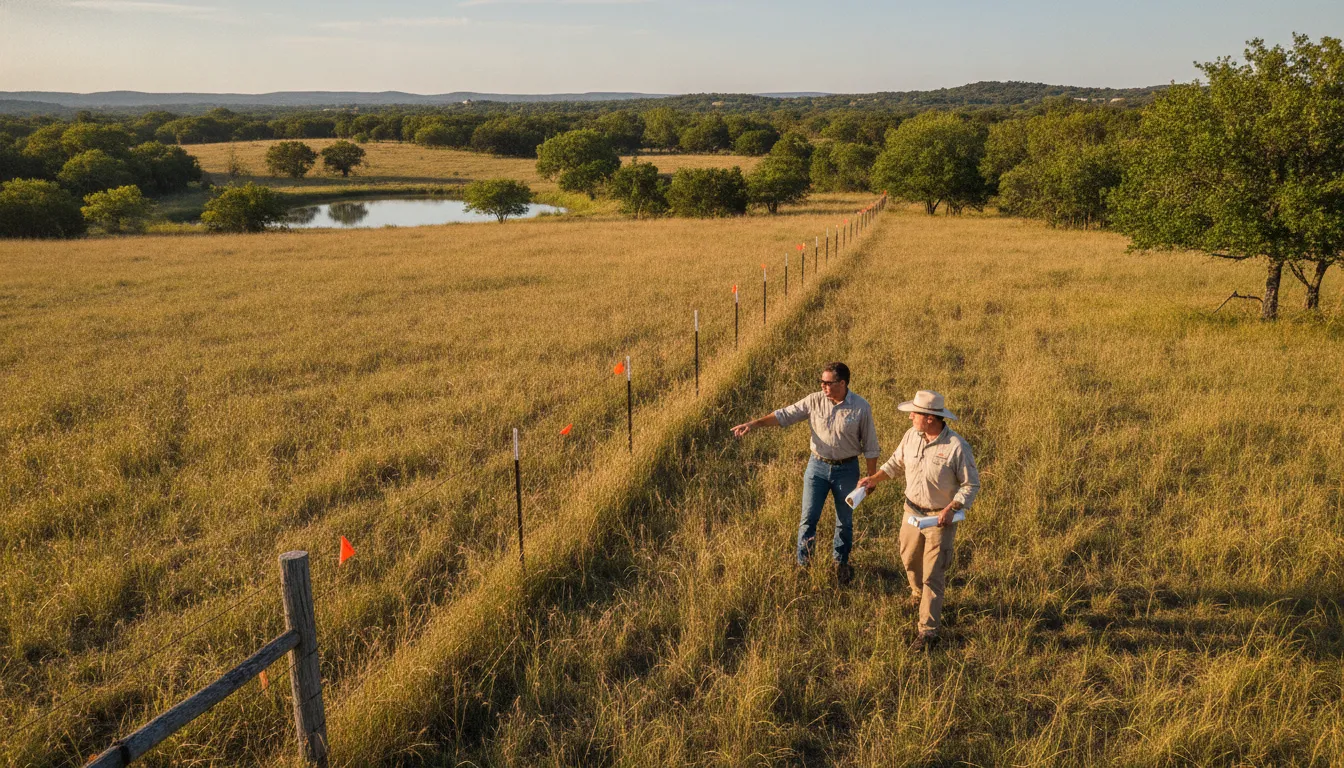
Walk the property and compare visible access and boundaries with the title commitment and survey.
Buying rural land in Texas is not like buying a home in the city. Large lots often have a long past. This past can create risks that are hard to see. A title search finds these risks before you buy. Knowing the importance of title insurance is the best way to keep your money safe. It covers past issues that might affect your right to the land today.
Access and boundary conflicts
Rural land needs a clear path to a public road. Some lots do not touch a main street. You might need to cross a neighbor's land to get to your gate. A title search shows if there is a legal path, called an easement. Without this right, you could be stuck with no way to enter your land. This is a common risk when buying rural land in Texas that has been split from a larger ranch.
Boundary lines can also be a source of trouble. Old fences may not sit on the legal line. A neighbor might claim part of your land because their fence has been there for years. These survey errors can lead to long legal fights. Title insurance for land in Texas helps protect you if a neighbor tests your lines. It ensures that the dirt you pay for is the dirt you own.
Mineral rights and rules
In Texas, owning the top of the land does not always mean you own what is under it. Oil, gas, and coal rights are often split from the surface rights. This means a firm could have the right to drill on your land even if you do not want them to. A title search will tell you if the minerals have been sold in the past. It is vital to know this before you plan where to build your home or barn.
You must also look for deed rules. These are sets of rules made by past owners. They might say you cannot keep some animals or build a mobile home. You can find these rules in the Schedule B part of your title papers. These restrictive covenants stay with the land through every sale. If you do not follow them, you could face fines or be forced to move a building.
Before you close the deal, make sure the land fits your plans. You might want to build a small shop or a guest house. Some title papers show rules that forbid these types of buildings. Checking these rules early saves you from a bad buy. A title company will look for these limits so you can be sure the land works for your goals.
Tax liens and heirship issues
Rural land can stay in one family for many years. If an owner dies without a clear will, the land may go to many heirs. Some heirs might not even know they own a piece of the land. If you buy from just one person, the others could come back later to claim their share. This is a common title flaw that can stop a sale or cause a legal mess after you move in.
Unpaid bills can also cloud a title. If the past owner did not pay their taxes, the state can put a lien on the land. Mechanic's liens are another risk. These happen if a worker was not paid for clearing brush or building a fence. When you buy the land, you could become liable for those old debts. Protecting your land title with a policy ensures you are not stuck paying for the last owner's mistakes.
Questions to ask about title before you buy
Ask which policy protects you, what amount it covers, which exceptions appear in Schedule B, whether access is insured, and which issues must be resolved before closing. Also ask who can explain restrictions or mineral-right reservations that may affect your plans.
Buying land is a big step. You want to make sure the land is yours once the deal is done. Asking the right questions helps you avoid legal traps. In Texas, the state does not require title insurance for land in Texas by law. But most lenders will need a loan policy before they give you a loan. You should also get an owner's policy to protect your own money and rights to the land.
Checking the policy type and insured amount
First, ask your title agent what kind of policy you are getting. There are two main types in Texas. A loan policy protects the bank or lender. An owner's policy protects you. It is a smart move to have your own policy. This owner's title policy often covers up to the full price you paid for the land. It keeps you safe from past issues that might pop up later.
You should also ask about the cost of the plan. In Texas, the state sets the rates for title insurance. This means every company charges the same price for the base policy. But you can still shop around. Look for a company that gives good service and tells you things in plain words. You only pay for this insurance one time at the closing. It protects you for as long as you or your heirs own the land.
Make sure to ask about who is on the policy. The names must match the deed. If there is a mistake, it could cause big problems later. You might want to read more about understanding title insurance before you sign any papers. This helps you know what to expect during the closing process.
Understanding Schedule B and land rights
Next, ask to see Schedule B of the title commitment. This part of the paper is a key part. It lists things the policy will not cover. These are called items left out. They often include power and water lines or rules about how you can use the land. Ask your agent to tell you about each item on this list. You need to know if an old rule stops you from building what you want.
You also need to ask about oil and gas rights. In Texas, the rights to the dirt on top and the oil or gas below are often split. Owning the land does not always mean you own what is under it. Ask the title company if they have checked the record for these rights. Knowing who owns the oil and gas helps you avoid shocks. It is a big part of keeping your rights to your new rural land.
Resolving issues and hidden liens
Ask if there are any liens or unpaid taxes on the land. A lien is a legal claim for money owed. This could be from an old loan or a bill for work done on the land. A title search should find these issues. If the search finds a lien, ask what the seller must do to clear it. The title company should make sure these are paid off before you take owning the land.
Last, ask what happens if a problem shows up after you buy. This is where your insurance works for you. If someone claims they own your land, the title company must step in. They will pay for a lawyer to defend you in court. They also pay for losses covered by your policy. Having this safety net gives you peace of mind as you start your life on your new land.
Frequently Asked Questions
Is title insurance required when paying cash for Texas land?
Texas law generally does not require a cash buyer to purchase an owner's title policy. However, an owner's policy can help protect the buyer's investment from covered past title defects. Review the commitment and your options with the title company before closing.
How long does an owner's title policy last?
An owner's policy generally remains in effect for as long as the insured owner or qualifying heirs retain an interest in the property. Subject to its terms and exclusions. Ask the title company to explain exactly who is insured and when coverage ends.
Can I shop around for title insurance prices in Texas?
No, you cannot shop for lower prices. According to the Texas Department of Insurance, the state sets uniform premium rates for all title companies. This means the cost of your policy will be the same no matter which firm you use. You can, however, shop for better deals on escrow and closing fees.
How is title insurance different from homeowners insurance?
Title insurance and homeowners insurance cover different risks. Homeowners insurance protects you from future events like fires, storms, or theft. In contrast, title insurance covers past events. It protects your rights to the land from errors that happened before you bought it. You only pay for it once at closing, and it lasts for as long as you own the land.
Does title insurance cover land use rules or zoning?
Most basic title policies do not cover how you can use your land. They often list local rules, utility paths, and zoning as exceptions. This means if a city rule or an old deed rule limits your plans, the policy will not pay for your loss. It is vital to check these details before you buy any rural plot.
Ready to contact us about available rural land?
Buying rural land without a plan can lead to long delays and high costs. If you wait too long to look at properties, you may miss out on the best lots in Central Texas. Starting your search today lets you secure your spot and start building your future on your own terms.
Ready to contact us about available rural land and property-specific next steps? Contact us to talk to a land expert.


Comments